Posts Tagged ‘chicken’

Garfield Park Conservatory Chicken Talk, Jan. 26, 2011


Home to Roost will be attending this event at the Garfield Park Conservatory!

Come out to learn more about chickens!

Keeping Chickens in Chicago, Wednesday, January 26

Hours: 6:30 pm – 8:00 pm

Where: Jensen Room, Garfield Park Conservatory, 300 N. Central Park Ave., Chicago, IL 60624-1996

Cost: $5 suggested donation

January is a great time to plan inspirational projects for the year – there’s no better way to turn over a new leaf than to explore the age old question of chickens, eggs, and Chicago. Curious about Chicago’s chicken codes? Wondering what kinds of chickens are the best to keep in a coop? Want to know how chickens keep warm in the winter? These questions and more will be answered at this “chicken chat,” presented by chicken keeper Jim Lichon. Please register by emailing Robin Cline at rcline@garfieldpark.org.

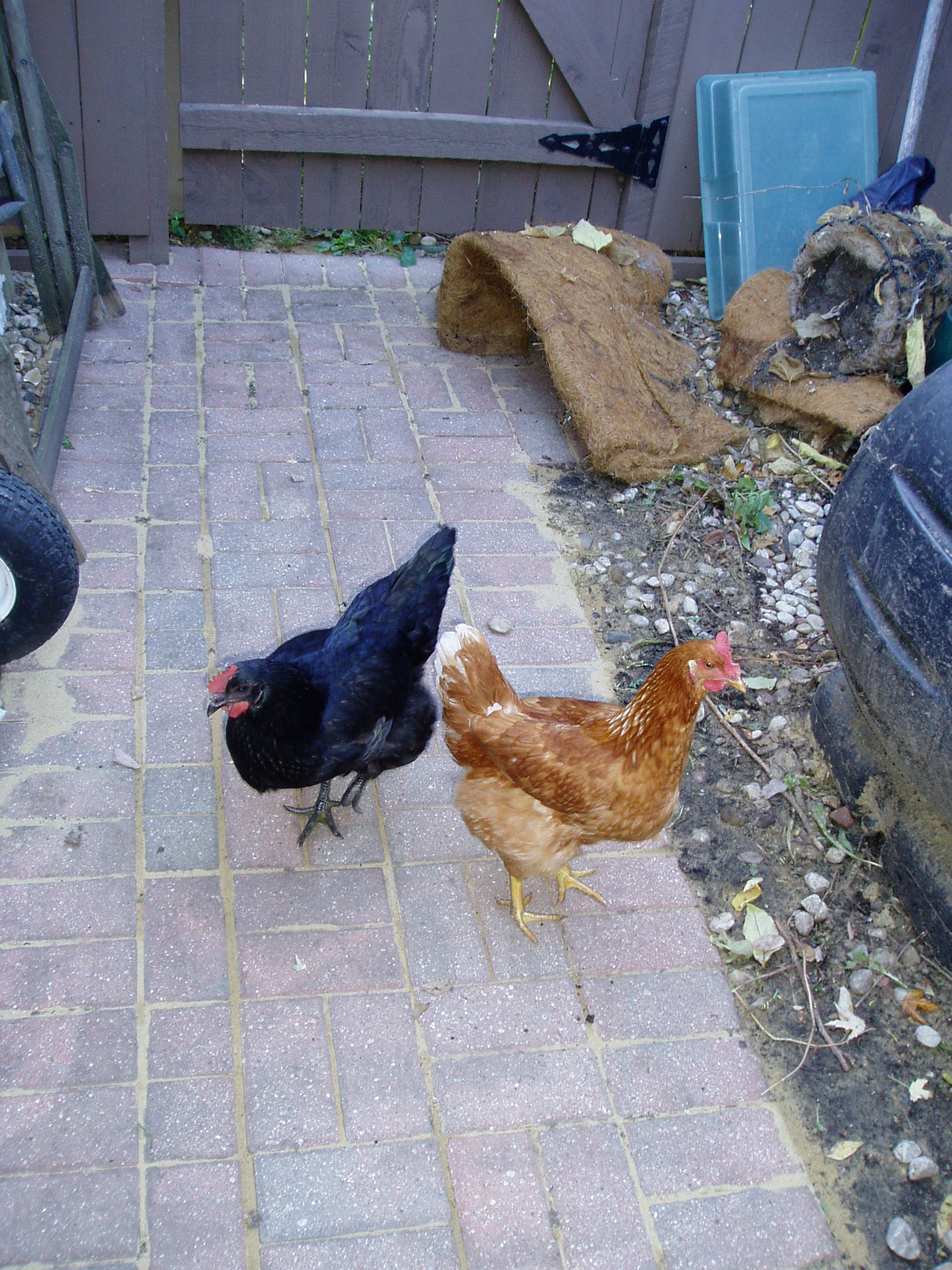
The hens tooling around the yard

Strange Coincidences Around My Urban Chicken Consulting Business


Strange coincidences have sprung up around my urban chicken consulting business. To name a few:

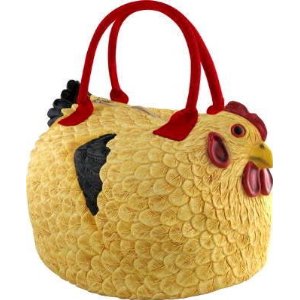
A few years ago, I purchased a chicken purse…(The Urban Chicken Consultant Recommends… the Rubber Chicken Purse!). Have chicken purse, will travel – and, boy, the places that thing has taken me…

In the spring of 2008, if memory serves, the chicken purse and I went to see my accountant, Stewart, who lives in the Austin neighborhood. He said, “You have a chicken purse!” I explained to him that I had chickens when I was a kid. As it turns out, Stewart was interested in getting chickens… in his backyard… in Austin… in Chicago.

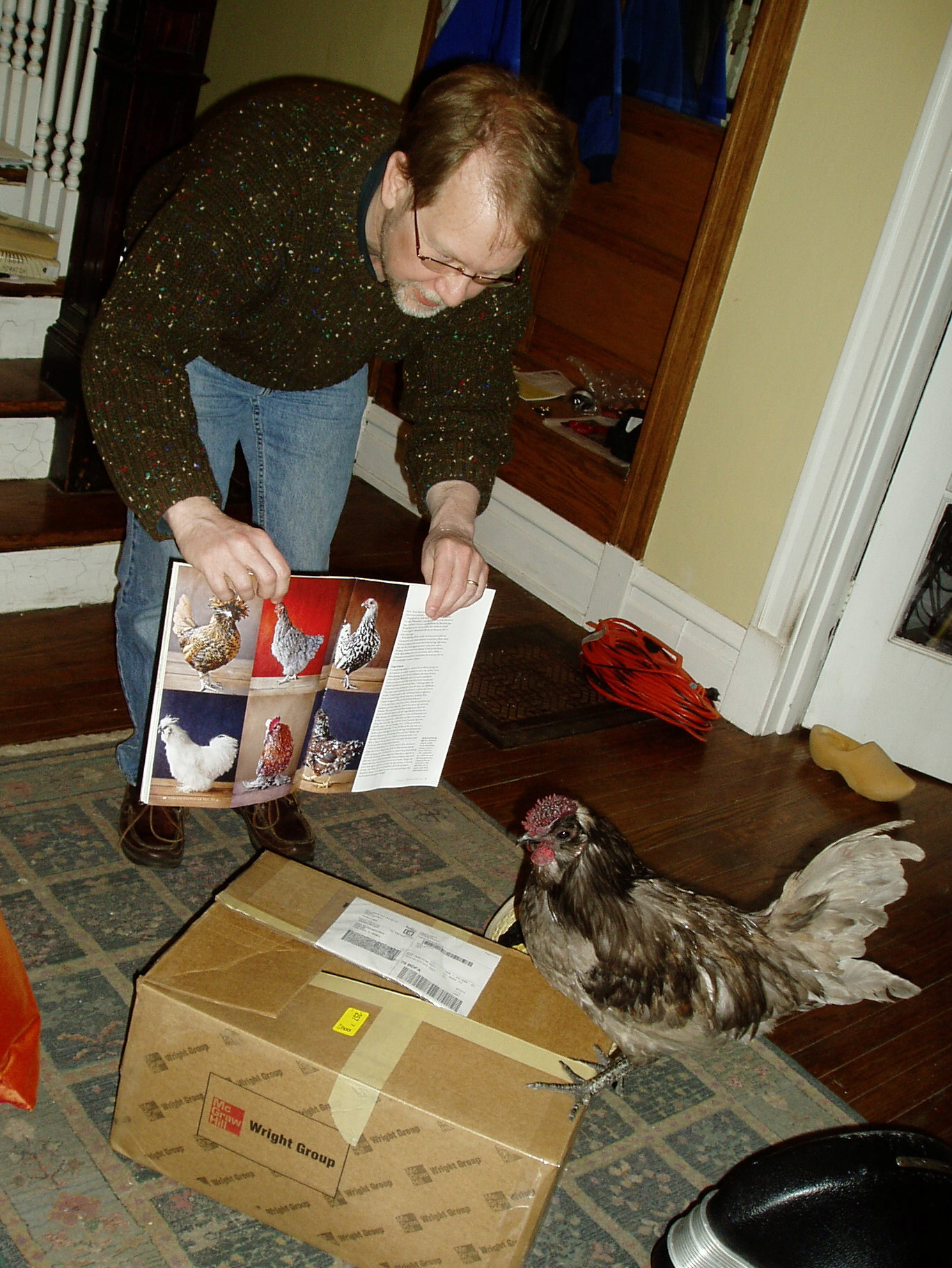
Stewart and friend - is this chicken Playboy or Vogue?

This was rather shocking news to me. He told me about the urban agriculture movement and planted the suggestion that folks in Chicago might benefit from a chicken consultant. Inspired, I designed business cards, mostly as a joke, on Vista Print!

Fastforward to late winter/early spring of 2010, before I started being serious about urban chicken consulting: My friend Jane attended a benefit event in Oak Park. She found an unusual silent auction item: a low-carbon footprint chicken coop. The donor: Seamus Ford. Jane also spotted an ad for Earth Fest and suggested that I contact Seamus and get a booth at Earth Fest. I was a little incredulous, but sure, why not?

I looked up Seamus on LinkedIn, and there he was! As it turned out, Seamus was a neighbor of Stewart, my account. Stewart and his wife had talked to both Seamus and me about each other, but never by name! We talked for a bit on the phone, and then met at Red Hen on March 28 to talk about this crazy idea – urban chicken consulting – really? All right… So on April 1, I started this blog, officially hanging out my shingle, and Seamus and I staffed a booth at Earth Fest.

Seamus and I shared a booth at Earth Fest.

Bruce Caughran hired me and called  Terry Dean of the Wednesday Journal to cover my first media event, setting up chickens in Bruce’s backyard: Home to Roost Makes the Paper! Oddly enough, I ran into both Bruce and Terry the day before my appearance on WCIU in September.

Bruce and Ailsa with the lovely a-frame coop made by Alcuin Middle School

Still more oddly, hours after the WCIU appearance, which dealt with inspiring female entrepreneurs, I got a cold call from a woman in California who wants to start her own urban chicken consulting business. She was calling me for tips, pointers, ideas, and other information. She had no idea I’d just been on TV, talking about female entrepreneurs and chickens – she had found me on AOL’s WalletPop (more on her and her business to come!).

The week of the taping for Chicago Tonight, which airs on 11/4, I met Becky Fogel of Vocalo radio station in Caribou Coffee on Lake Street. Because it was too loud for a recorded interview, we headed to Red Hen, sitting at the same table where Seamus Ford and I sat on March 28. Who happened by Red Hen? None other than Stewart, my accountant!

There have been a number of times when I’ve felt that things have come full circle in this crazy ride that is urban chicken consulting. But the circle moves, redefines itself, and comes full circle again – but in a different way.

I’ve done only word-of-mouth and social media advertising, and to date I have two TV appearances; a upcoming radio spot; and several newspaper, internet, and magazine articles; as well as a film student from Columbia who is producing a documentary covering my avian adventures.

Coincidence? Perhaps not. Maybe just a confirmation that I’m in the right place at the right time. I’m excited to see what surprises are around the corner for the chicken purse and me!

Burger King’s Subservient Chicken


All right, this post is going to be classified as “Weird Chicken Stuff.” There’s just no way around it.

Burger King is advertising chicken just the way you like it, aka The Subservient Chicken. Tell the guy in the chicken suit what to do, and he’ll comply. It’s fun to try to stump him. A guy in a chicken suit who plays bagpipes?! Can’t beat that!

Check it out for a laugh.

Home to Roost in Mindful Metropolis


Mindful Metropolis wrote a great article on the Chicago urban chicken movement. Check out the thoughtful coverage here or here, page 24 (for pictures!).

The Urban Chicken Consultant Recommends… the Rubber Chicken Purse!


Rubber chicken purse

Rubber chicken purse


Might I recommend the snazzy and memorable rubber chicken purse, not to be confused with the dead rubber chicken? This nice, roomy handbag can hold wallet, keys, business cards, dental floss, Altoids, camera bag, pens, CTA card, Post-It notes, gloves, flashlight, spare pair of shoes…

The rubber chicken purse makes a definite statement. I’m not quite sure what that statement is yet, but I’ve found that people remember the purse more than they remember me. Either that, or they leave lots of room on either side of me as I walk down the street.

For an urban chicken consultant, this purse also functions as a marketing tool. Nothing gets a conversation going like a rubber chicken purse. Therefore it is a tax-deductible business expense (I’m hoping my accountant isn’t reading this…).

Chicago residents can find this chicksessory at the Chicago Architecture Foundation and Hoypoloi Gallery (my FAVORITE Chicago art gallery). Those not lucky enough to have access to Hoypoloi Gallery (or Chicago) can purchase the purse online.

For those who truly want to maximize accessorizing potential, try the rubber chicken change purse.

Rubber chicken coin purse

Rubber chicken coin purse

Hen-apalooza, Chicago, October 3, 2010


Backyard hens had a chance to meet a number of two-legged mammal critters on October 3, during the Hen-apalooza Coop Tour in Chicago on October 3, 2010.

Encompassing several neighborhoods that have been overtaken by barnyard fowl, the tour, organized by the Chicago Chicken Enthusiasts and Martha Boyd of Angelic Organics Learning Center, offered chicken owners, would-be owners, and the curious public the opportunity to take a peek inside the city’s backyard poultry fad.

Chicago’s chicken keepers and folks as far away as northern Indiana had a chance to swap tips, see new ideas in action, and connect with other chicken keepers. Home to Roost Urban Chicken Consulting presented a short six-point inspection–a quick chicken check-up to assess a bird’s health.

The Chicago Sun-Times deemed the event worthy of coverage, and their scoop on the coop tour is here.

Despite it being a crisp, fall day, the turn-out at the 15 featured coop locations was impressive considering the short time frame from inception to event. The Chicago Chicken Enthusiasts are working on a bigger and better Hen-apalooza for the future! Stay tuned!

Egg Carton Labels: What’s in a Name?


Free range. Organic. Cage Free. Omega-3. Farm Fresh. All Natural.

The labels on egg cartons are sometimes not all they’re cracked up to be. What do all these terms mean? If you don’t have your own chickens, how can you know you’re getting eggs from humanely treated hens?

A label you won’t see is battery. About 98% of the eggs produced in North America are from battery hens, who “live” in horrific conditions: allotted a space no bigger than their bodies in tight quarters with other hens, they are force-molted through starvation to keep up egg production. Their beaks are trimmed with a hot wire to prevent pecking. The birds are handled with no concern for their lives or safety, and their bones are broken in handling. Many live their lives not even able to flap their wings.  They die from starvation if they get stuck in their cages, and often dead hens are not discovered and remain in the cage until after they have decomposed.  To learn more about the conditions in battery-cage facilities, click here or here.

So, what’s a better option, and what do all those labels on the more expensive eggs mean anyway?

Here’s the skinny on all the labels. Truthfully, many don’t hold a lot of meaning in terms of animal welfare, so investigate before you buy.

Find a pdf summary of this information in table format here: Egg Carton Labels.

Farm fresh: This term is largely meaningless, and hens are battery kept.

All natural: This term is largely meaningless, and hens are battery kept.

Omega-3 Enhanced: This means the chickens were fed large amounts of food containing omega-3 fatty acids, such as flaxseed, which are expressed in the egg. The hens are mostly battery-cage hens. A better alternative to omega-3 enhanced eggs is to simply eat more foods with these fats, since eggs are not a great source.

Cage-Free or Free-Run: These terms apply to chickens who are not kept in battery cages. They live in henhouses with free access to the enclosed space but do not get outdoors. They are force-molted and treated like battery hens. These facilities are not inspected to assure conditions are as advertised.

Free-Range: These hens are house in conditions similar to those in cage-free or free-run environments, with the exception that they have access to the outdoors. Sometimes this consists of a small door on the henhouse that may or may not be kept open. These facilities are not inspected to assure conditions are as advertised.

Pasteurized: These eggs have been processed to eliminate salmonella bacteria. They have been heated very quickly to a very high temperature to kill bacteria and present less of a risk if eaten raw.

Certified Organic: These hens get an organic diet and have access to the outdoors and vegetation. Their beaks may be trimmed and they may be force molted. Organic eggs must be certified by inspectors. However, the food advocacy group Cornucopia Institute recently found that an “organic” egg-production facilities are using battery production methods. Read their report here.

Animal Welfare Approved: These hens are raised humanely indoors and are cage free. They are not force molted, and beak trimming is very limited. This is the highest standard available, but these eggs are not sold in stores. They are inspected by the Animal Welfare Institute. Find more information here.

American Humane Certified: These birds have more room than battery-cage hens (the size of a piece of legal-sized paper) and they are not force molted, but their beaks may still be trimmed, and studies show that this method of caging is still detrimental to health. These facilities are inspected by a third-party verifying agency.

United Egg Producers Certified: This means the hens have access to fresh food and water. They may be battery kept and force molted, and their beaks may be trimmed. More info on UEP here.

Pastured: The hens that lay these eggs are kept on pasture (or in backyards) and are not confined. They have access to bugs, worms, and other natural foods, and they also eat grains. For more information on pastured eggs, click here. These eggs have more omega-3 fatty acids and higher concentrations of certain vitamins.

As you buy eggs, be aware that commercial egg producers slaughter all male chicks (50% of the hatch) shortly after they hatch. Male chicks are of no use to the egg industry.

So, there you have it. If you don’t have your own chickens, you can make a wiser decision about where your eggs come from.

Sources:

The Humane Society of the United States. “Egg Carton Labels.” The Humane Society of the United States. Posted Nov. 9, 2009. www.humanesociety.org/issues/confinement_farm/facts/guide_egg_labels.html

Copley, Jennifer. “Egg Labels–Free Range, Organic, and Omega-3.” Suite 101.com. Posted Jan. 8 2010. www.suite101.com/content/egg-labels-free-range-organic-and-omega3-a186883.

Butler, Kiera. “Is Your Favorite Organic Egg Brand a Factory Farm in Disguise?”  Motherjones.com. Posted Oct. 4, 2010. http://motherjones.com/blue-marble/2010/09/eggs-salmonella-cage-free.

Certified Humane: The hens live in barns, uncaged, and they can do normal chicken things like dusting. They are not starved to force a molt but their beaks may be trimmed.  These facilities are inspected
The Scoop on Salmonella in Eggs


For those of you who have chickens, you may be asking, “How safe are MY eggs from Salmonella contamination?”

The good news is, they are likely VERY safe.

Salmonella are bacteria that live in human and animal intestinal tracts. The bacteria can pass in fecal matter and so may be found in soil, water, and other matter that has come into contact with fecal matter.

So how do the bacteria get into eggs? There are two ways this might happen:

1) Chicken poop gets on the shell of the egg. The bacteria pass through the pores and proliferate inside the egg.

2) An industrial egg-laying hen whose ovaries are contaminated with salmonella bacteria passes the bacteria along in the egg-formation process.

Solutions are fairly simple.

1) Give your hens adequate space and good living conditions. This includes clean food and water daily. Hens in poor living conditions, like battery-caged layers, are more susceptible to illness (like salmonella) due to overcrowded, stressful living conditions. In your backyard coop, one nest for every four hens is adequate.

2) Keep your nest boxes free of fecal matter. Wood shavings are good for this, because the poop can easily be scooped out in clumps, much like clumping kitty litter.

3) Collect your eggs daily and refrigerate them right away. Industrial eggs have many stops: candling, sizing, packaging, shipping, shipping again, shelf stocking. Along the way temperatures can fluctuate, leading to bacterial growth. Keeping your eggs refrigerated will prevent this.

4) Wash your eggs only when you are ready to use them. When a hen lays an egg, she secretes a wet covering that seals off the pores from pathogens. If you see a freshly laid egg, you will notice that it looks wet and then quickly dries. This is called the cuticle or bloom. Keep this coating intact until you are ready to use the egg. Brush or sand off any foreign material that is on the eggshell.

5) Cook eggs completely. Cooking eggs to 160 degrees will prevent illness.

If your hens are contaminated with salmonella, you will most likely have built up immunity to the particular strain they carry.

Enjoy your fresh eggs!

(Sources: Damerow, Gail. “Backyard Chicken Eggs Are Safe,” and Jansen Matthews, Lisa. “Safe Egg Handling,” both in Backyard Poultry, October/November 2010, 6.)

Chickens now allowed to roost in Evanston!


Hats off to the Evanstoners who worked so hard for the right to the pursuit of avian happiness in their own backyards!

On September 28, 2010,  Evanston city council voted 6 to 3 to allow residents to have chickens, overturning a 36-year ban on chicken keeping. Residents will keep hens for eggs, fertilizer, and as pets.

There’s a catch, though: residents will have to pay a $50 licensing fee to keep hens.

Concerns included noise, small, rodent infestation, and predators; however, chicken supporters surveyed officials in 20 locales where chicken keeping is legal, and officials reported satisfaction with the existing laws.

A proud cock-a-doodle-doo for the Evanston Backyard Chickens group!

To read the Tribune article, click here.

October 3, 2010: Hen-apalooza Chicagoland Chicken Coop Tour


Are you thinking about raising chickens but wonder what it’s like to do so in an urban or suburban area? Or are you already raising chickens and wonder how others are doing it? Or are you just interested in taking a fun tour through the Chicago area?

On Sunday, October 3rd, 2010—rain or shine—the first annual Hen-apalooza Chicagoland Chicken Coop Tour will take place at 15 locations throughout the area. Hen-apalooza will be a self-guided tour, so visit as few or as many local chicken-keepers and their fowl friends as you like. A map of tour locations is available at http://tiny.cc/8630w.

Home to Roost urban chicken consultant Jennifer Murtoff will be on hand at 2 PM at the Logan Square Co-op (1936 Sawyer Ave.) to talk about her experience and services. She’s also give some quick tips, a “six-point inspection” to assess the health of a chicken.

For more information and a Hen-apalooza Passport to track your tour progress, please see http://tiny.cc/hen-apalooza or the Chicago Chicken Enthusiasts Google Group at  groups.google.com/group/chicago-chicken-enthusiasts.

Children under 16 must be accompanied by an adult. No dogs or other pets please. Street parking available at each location. Please consider biking or using public transportation.

Hen-apalooza Chicagoland Chicken Coop Tour is presented by the Chicago Chicken Enthusiasts (groups.google.com/group/chicago-chicken-enthusiasts) and generously supported by Angelic Organics Learning Center (learngrowconnect.org), Backyard Chicken Run (backyardchickenrun.com) and DoubleTake Design (doubletakedesign.com).