Posts Tagged ‘hens’

Home to Roost Featured In Redfin Article


Need some ideas for your coop? Whether you’re planning to raise chickens at home in Asheville, NC, Eugene, OR, or Burlington, VT, check out this Redfin article featuring Home to Roost and other chicken experts: 5 Chicken Coop Ideas for a Thriving Flock.

Chicken Vets in the Chicagoland Area


If you have a cat or a dog, it’s easy to find a vet, even in a pinch. But it’s harder to find a vet who’ll treat a chicken. You’ll want to find a vet who is a member of the Association of Avian Veterinarians (AAV), and there are not as many avian vets as there are cat and dog vets. Avian vets understand the anatomy and physiology of birds, which are different from those of mammals. 

If you’re able to take your chicken to a vet, it’s important to establish a relationship with an avian vet before your bird needs their services. Because there are fewer avian vets, they are often overbooked: it may be easier to get an appointment as an existing or long-term patient.

Home to Roost LLC, while not a veterinary service, offers troubleshooting and advice in emergencies, and vet referrals for chickens and other birds. We endorse the following avian vet practices in the Chicagoland area.

AURORA

Indian Prairie Animal Hospital

Address: 1195 S Frontenac Street, Aurora, IL 60504
Phone Number: (630) 820-6999
Website: Indian Prairie Animal Hospital
Certified Avian Vet: None; AAV members

Indian Prairie Animal Hospital has been providing veterinary care for birds, including chickens, since 1984. While they do not have a board-certified avian veterinarian on staff, their veterinarians are members of the Association of Avian Veterinarians (AAV) and have extensive experience treating a wide range of avian species.

The practice offers general wellness care, diagnostics, and treatment for common avian health concerns. They do not provide in-house emergency services but refer after-hours and urgent cases to Veterinary Emergency Group (VEG) or Midwest Animal Hospital.

CHICAGO 

Animal House of Chicago

Address: 2752 W Lawrence Ave Suite 3, Chicago, IL 60625
Phone Number: (773) 878-8002
Website: Animal House of Chicago
Certified Avian Vet: Dr. Byron de la Navarre

Dr. Byron de la Navarre is the chief of staff at Animal House of Chicago. The practice, established in 2003, treats a variety of pets including birds. Dr. de la Navarre is an active member of the Association of Avian Veterinarians (AAV) and serves as the Illinois State Liaison.

The practice offers comprehensive veterinary care including preventative care, nutritional advice, and emergency services for birds and other exotic pets. In-house diagnostic capabilities include full blood and chemistry work, cytology, radiology, endoscopy, and ultrasound. 

Veterinary Emergency Group, Lincoln Park 

Address: 755 W. North Avenue, Chicago IL 60610
Phone Number: (312) 757-5444
Website: Veterinary Emergency Group, Lincoln Park 

VEG provides emergency care only. While they do not have an avian vet on staff, they can stabilize a chicken and treat symptoms until the bird can be seen by an avian vet at another practice. There are additional locations in Oak Brook, Naperville, the South Loop, and Buffalo Grove.

GLENWOOD

Glenwood Village Pet Hospital

Address: 555 Glenwood-Lansing Rd, Glenwood, IL 60425
Phone Number: (708) 758-2400
Website: Glenwood Village Pet Hospital
Certified Avian Vets: Dr. Katy Parr, Dr. Amanda Hernandez

Glenwood Village Pet Hospital sees chickens, and they offers surgeries, necropsies, X-rays, and ultrasounds (usually available with a one-week notice). The practice performs some lab work in house and may send out other fecals, cultures, and bloodwork. They can hospitalize critically ill patients, though there is no overnight staff for monitoring. Hospitalized patients still benefit from treatments like injections, fluids, and gavage feeding, which are typically impractical at home.

LISLE

Ness Exotic Wellness Center

Address: 1007 Maple Ave, Lisle, IL 60532
Phone Number: (630) 737-1281
Website: Ness Exotic Wellness Center
Certified Avian Vets: Dr. Robert Ness, Dr. Richard Nye

Ness Exotic Wellness Center has a team of certified avian veterinarians, including Dr. Robert Ness and Dr. Richard Nye. They offer comprehensive care for birds, including diagnostics, emergency services, and holistic and specialized treatments.

The clinic is well equipped with an in-house lab and advanced medical technology to ensure prompt and effective care for avian patients. Ness Exotics provides emergency services during office hours and various specialized treatments for avian species.

LOMBARD

Lombard Veterinary Hospital

Address: 244 E St Charles Rd, Lombard, IL 60148
Phone Number: (630) 627-7090
Website: Lombard Veterinary Hospital

Dr. Zachary Kline at Lombard Veterinary Hospital, while not an AAV certified vet, provides quality veterinary services for birds. The hospital offers a range of services including emergency care, urgent care, surgeries, and in-house lab diagnostics. Problems they commonly see in birds like chickens, quail, and turkeys include upper respiratory infection, bumblefoot, gastrointestinal bacterial or fungal overgrowth, egg binding, feather mites, and worms/protozoans in the GI tract.

NILES

Niles Animal Hospital and Bird Medical Center

Address: 7278 N. Milwaukee Ave., Niles, IL 60714
Phone: (847) 647-9325
Website: Niles Animal Hospital and Bird Medical Center
Certified avian vets: Dr. Jamie Abete

Dr. Abete, the practice owner, is interested in all avian species, as well as exotics and cats and dogs. She was involved in wildlife rehibilitation at Ross University through the school’s chapter of AAV (Association of Avian Veterinarians). The practice provides a wide variety of services, including in-house laboratory services, surgical care, screening tests, and specialist referrals. 

NORTH AURORA

Animal House Veterinary Hospital

Address: 356 N Randall Rd, North Aurora, IL 60542
Phone Number: (630) 701-1372
Website: Animal House Veterinary Hospital
Certified Avian Vet: Dr. Mary Grabowski

Dr. Mary Grabowski at Animal House Veterinary Hospital in St. Charles provides veterinary care for birds, including chickens. The hospital offers various services such as surgeries, diagnostic imaging, and emergency care.

SKOKIE

Blue Pearl

Address: 3735 Dempster St., Skokie, IL 60076 
Phone Number: (847) 673-9110
Website: Blue Pearl

This emergency group works in conjunction with Chicago Exotics and can stabilize a bird until it can be transferred to an avian veterinary practice. There is an additional location in Northfield.

Chicago Exotics Animal Hospital

Address: 3757 W. Dempster St., Skokie, IL 60076
Phone Number: (847) 329-8709
Website: Chicago Exotics Animal Hospital
Certified Avian Vets: Dr. Susan Horton, Dr. Ellen Boyd

The whole Chicago Exotics team treats chickens and poultry, and Dr. Ellen Boyd did her graduate work on chickens and poultry. The practice offers many in-house labs and other services. As an exotics-exclusive practice, they understand the need for immediate lab results. Their in-house diagnostic capability includes full blood and chemistry work, cytology, radiology, endoscopy, ultrasound, and surgery. The warm exotic ICU features avian incubators, avian nebulizer units, and inline oxygen for all cages. Chicago Exotics is especially bird friendly! They can do home visits for large flocks, surgery, CT, acupuncture, chiropractic care, cold laser treatments, and many others. The practice also offers 24-hour critical care services in association with their emergency partners, including Blue Pearl Skokie.

INDIANAPOLIS

Avian and Exotic Animal Clinic of Indianapolis

Address: 9330 Waldemar Rd, Indianapolis, IN 46268
Phone Number: (317) 879-8633
Website: Avian Exotic Animal Clinic of Indianapolis
Certified Avian Vet: Dr. Angela Lennox

Dr. Angela Lennox at Avian Exotic Animal Clinic of Indianapolis specializes in the care of exotic animals, including birds. The clinic provides a wide range of services, including diagnostics, surgeries, and emergency care and employs the state’s only board-certified avian and exotic mammal specialists.

Straight-Run Chicks Looking for Home


Contact Suzanne at suzannebavichai@gmail.com or (847) 421-3865 or Sam at (773) 255-7341. 

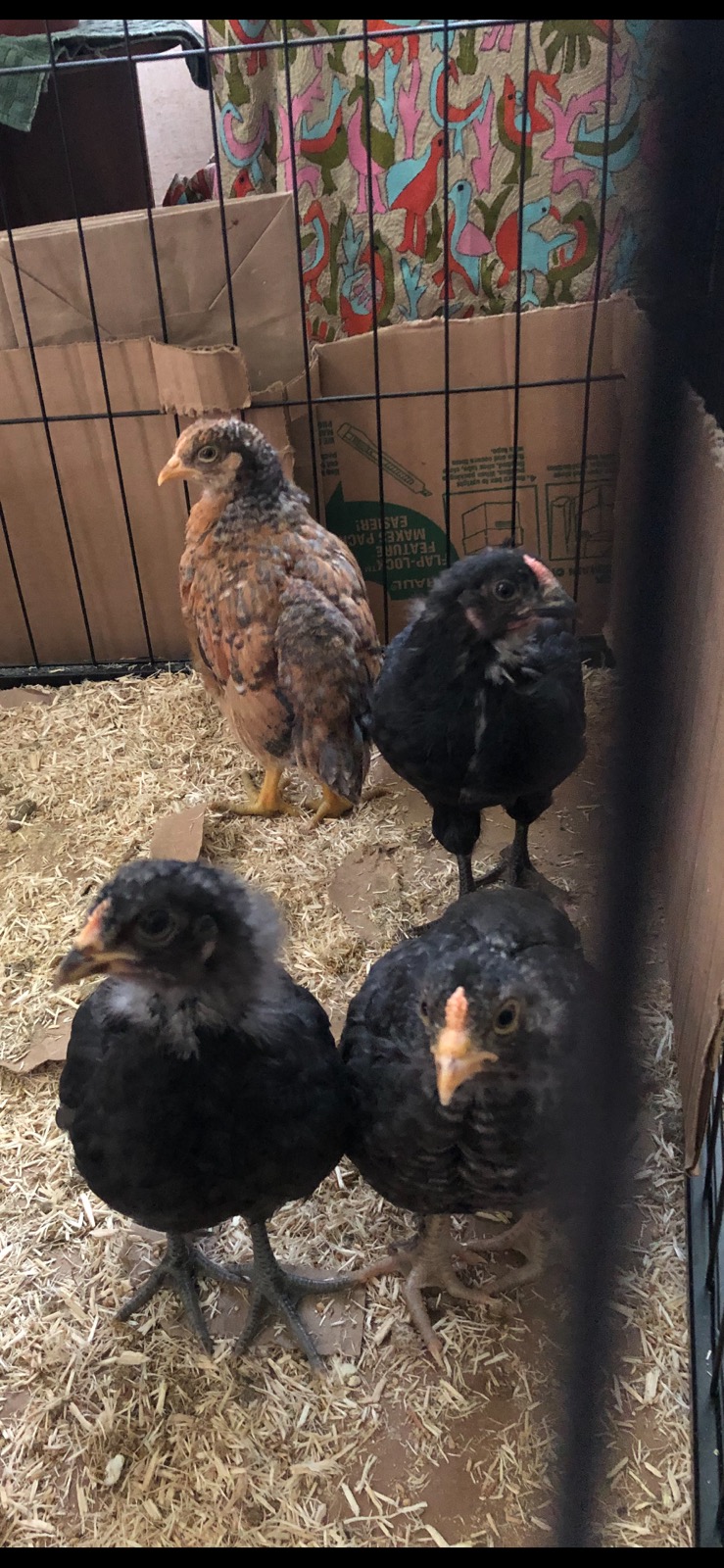
From Suzanne: The kids hatched chicks in their 6th grade science class, and their teacher had a family emergency so we’re trying to help with rehoming six straight-run chicks (meaning there is a 50% chance of getting males). They would like them to go to good, no-kill homes. The birds have been hand raised and are quite tame. They think two are roosters. The family is in Evanston. 

The school’s kindergarten teacher also has an additional 5 chicks who are just shy of 3 weeks old and hopes to find good, no-kill homes for them. 

Contact Suzanne at suzannebavichai@gmail.com or (847) 421-3865 or Sam at (773) 255-7341.

Educational Programs for an Eco-Friendly Lifestyle: 25 Ready-to-Use Sustainable Living Programs for Libraries


Are you looking to integrate engaging and educational programs into your library that promote sustainable living? Look no further than the book 25 Ready-to-Use Sustainable Living Programs for Libraries. This comprehensive resource provides a diverse range of ready-to-implement programs designed to educate and inspire library patrons of all ages about sustainable practices. Purchase online at Amazon or the ALA Store

About the Book

25 Ready-to-Use Sustainable Living Programs for Libraries is a must-have for public and school libraries aiming to enhance their programming with sustainability-focused content. Each program is carefully crafted to be engaging, informative, and easy to implement, requiring minimal cost and preparation. From gardening and recycling to renewable energy and eco-friendly crafts, the book covers a broad spectrum of topics suitable for various age groups.

Featured Program: “All About Chickens!”

One of the standout programs in this collection is “All About Chickens!” a hands-on, educational program designed for children ages 3–7 and tweens ages 8–12. “All About Chickens!” invites young participants to explore the fascinating world of chickens through a variety of interactive stations.

The program begins with a brief lesson where kids learn about chickens’ physical characteristics, the differences between male and female chickens, the various types of feathers, and the parts of an egg. If time permits, children can also view a picture of a developing embryo inside an egg. Kids then move to stations where they compare and color or draw different breeds of chickens, explore the intricacies of feathers, examine eggs, and meet a live chicken (optional). Each station is supervised by an adult to ensure a smooth educational experience, and the program can host up to 15 participants with three stations, or 20 participants with four stations. Cost is minimal ($0–$50). 

Contact Home to Roost if you’re interested in hosting “All About Chickens!” at your library or school! 

Helping Your Chickens Survive the Dog Days of Summer


Help your chickens beat this crazy hot and humid weather!

As the temperatures and humidity soar, you’ll want to help your hens keep cool. A few tips for helping your hens beat the heat. When temperatures reach the mid-80s, your birds will probably start panting. In temperatures above 100, your birds may suffer heatstroke. Here are some tips, excerpted from my class on chickens and heat, to prevent that.

1) Provide fresh, clean water – and lots of it.

2) Freeze 2-liter bottles and put them in the coop to cool it down.

3) Remove excess bedding, which traps heat.

4) Feed a crumble feed, rather than a whole-grain food. Grains generate heat as they are metabolized.

5) Provide shade.

6) Use a fan or a mister.
7) Feed frozen treats (corn, watermelon, canteloupe).
If you notice that the birds are listless and lethargic (signs of heat stress), consider bringing them into a cool basement or to an air-conditioned mudroom (in a dog crate or portable cage). In emergencies, apply cool compresses to comb, wattles, and soles of feet. Chickens do not sweat. Do not cool them down too quickly, which may shock their system.As always, keep an eye on your birds and know what’s normal for them. This will help you catch problems before they become life threatening.

Helping Your Chickens Survive the Dog Days of Summer


Help your chickens beat this crazy hot and humid weather!

As the temperatures and humidity soar, you’ll want to help your hens keep cool. A few tips for helping your hens beat the heat. When temperatures reach the mid-80s, your birds will probably start panting. In temperatures above 100, your birds may suffer heatstroke. Here are some tips, excerpted from my class on chickens and heat, to prevent that.

1) Provide fresh, clean water – and lots of it.

2) Freeze 2-liter bottles and put them in the coop to cool it down.

3) Remove excess bedding, which traps heat.

4) Feed a crumble feed, rather than a whole-grain food. Grains generate heat as they are metabolized.

5) Provide shade.

6) Use a fan or a mister.
7) Feed frozen treats (corn, watermelon, canteloupe).
If you notice that the birds are listless and lethargic (signs of heat stress), consider bringing them into a cool basement or to an air-conditioned mudroom (in a dog crate or portable cage). In emergencies, apply cool compresses to comb, wattles, and soles of feet. Chickens do not sweat. Do not cool them down too quickly, which may shock their system.As always, keep an eye on your birds and know what’s normal for them. This will help you catch problems before they become life threatening.

Chickens and Cold Temperatures


We’re due for some VERY cold temps here in Chicago (in the negative degrees F, and windchills even lower), and a number of questions have come up about chickens and cold temps.

Here’s a list of ideas I’ve compiled. If you have suggestions, feel free to post.

Bedding

  • Keep bedding loose and dry. Deep bedding helps trap heat.
  • Clear snow from bedding.

 Coop

013

  • Cover the coop and wire-covered areas (such as the run) on three sides with a plastic tarp, heavy plastic, or plywood.
  • Fill in cracks and crevices in the coop with newspaper or cardboard.
  • The coop should not be completely airtight; allow some air circulation to prevent frostbite.

Roosts

  • Make sure roosts are in the least drafty place in the coop.
  • Use wide roosts for toe coverage (2-4 inches in width)

 Supplemental heat

  • If you have cold-hardy birds, they should be ok if the temperatures drop slowly.
  • Any source of heat is a fire hazard.
  • If ceiling is higher than 2 feet above the chickens, you may want to install a heat lamp above the roost that will turn on when the temp is in the single digits.
  • Be sure that the lamp cannot be damaged by a flying bird.
  • If you choose to heat, I’d suggest doing so only if the temperatures are in the single digits or below zero for several days raising the temperature by no more than 10 degrees higher than the outside temperature.
  • If you bring the birds indoors, make a gradual transition to warmer temps – e.g., from 0 degrees to 20 degrees to 45 degrees, NOT from 0 degrees directly to 45 degrees.
  • Note that providing too much can lead to obese birds. It also can be difficult for them to adjust to drastic changes in temperature.

Frostbite

  • Watch toes and combs/wattles for signs of frostbite. A little petroleum jelly on combs and wattles can prevent frostbite *however* be careful not to overapply – petroleum products can coat the feathers, reducing their insulating properties.
  • Do not allow them to be out in the snow for extended periods of time to avoid freezing their toes.
  • Clear snow out of sections of the run so they don’t have to walk in it.
  • If chickens do get frostbite, treat with aloe vera, can use aspirin solution for pain (three 325 mg tabs per 1 gal water), don’t massage, don’t heat up rapidly. Allow tissue to die/fall off naturally.

Food and Water

s5IMG_6513

  • Check water several times a day to be sure it’s not frozen.
  • Feed mash mixed with warm milk or water.
  • Provide a few handfuls of scratch grains in the evening before the hens go to roost. Can also feed a handful or two of scratch in the AM.

Laying

  • Extreme temperatures can stress the birds and cause hens to go out of lay.
  • Collect eggs so they do not freeze and lead to egg eating.

Winterizing Your Chickens


If you got chicks this spring, you probably asked the question, “How do I take care of the hens over the winter?” Bringing them into the house is not a great idea, and unlike dogs, chickens generally aren’t given to wearing sweaters and booties. Nor are they given to fluid replacement.

Here are some tips for helping your chickens ride out the winter.

Coop Environment

  • Move your coop to an area out of the wind.
  • Cover the run with tarps or heavy-duty plastic to prevent drafts.
  • Ensure that the coop is well ventilated but not drafty. Moisture buildup leads to frostbite.
  • Clean poop from the coop often. Chicken feces add to the moisture content of the air in the coop.
  • Stack strawbales around the run to hold in the heat and prevent snow from blowing in.
  • Minimize moisture in the coop. Moisture leads to frostbite. It’s more important to have a dry coop than a warm coop.
  • Provide lots of bedding or straw. Bedding should be dry and fluffy so that it traps the heat.
  • A heat lamp is optional. Beware of fire hazards, especially with the dry bedding, and use a red, rather than white, bulb. A reptile heat emitter can also help.
  • If you want your hens to continue laying during the winter, supplement white light in the morning (not evening) so that the hens get 14 hours of light. You can also let their bodies rest and give them the winter off from laying.
  • Provide wide roosts that allow the down feathers on their bellies to cover their feet.

Food and Water

  • Provide fresh, unfrozen water and be sure they have continuous access to food – their bodies need it to stay warm. You can keep two waterers – one in the house and one outside – and swap them out as the outside one freezes.
  • Provide extra protein for the birds during the winter months. A handful of dry cat (not dog) food will give an extra protein boost.
  • You can provide a handful of scratch grain in the evening, before they head to the roost for the night. This will help keep their metabolism going during the night.
  • Provide a head of cabbage, hung from a string or chain to keep them engaged and prevent pecking.
  • Use a bird suet basket as a treat box.

Frostbite

  • Use Vaseline on combs and wattles to keep them from freezing.
  • Watch feet, combs, and wattles signs of frostbite – they will look swollen and puffy at first. They will eventually turn black and fall off. Infection is a possible risk of a bad case of frostbite.

Contact Home to Roost if you’d like an in-home winterizing consultation.

Chickens and Hot, Humid Weather


As the temperatures and humidity soar, you’ll want to help your hens keep cool. A few tips for helping your hens beat the heat!

As the temperatures hit the mid-80s, your birds will probably start panting. If temperatures hit above 100, your birds may suffer heatstroke. Here are some tips, excerpted from my class on chickens and heat, to prevent that.

1) Provide fresh, clean water – and lots of it.

2) Freeze 2-liter bottles and put them in the coop to cool it down.

3) Remove excess bedding, which traps heat.

4) Feed a crumble feed, rather than a whole-grain food. Grains generate heat as they are metabolized.

5) Provide shade.

6) Mist their favorite dustbath areas so that the soil is damp (but not muddy).

7) Provide shallow pans of cool water that they can stand in.

8) Create air movement.

If you notice that the birds are listless and lethargic (signs of heat stress), consider bringing them into a cool basement or to an airconditioned mudroom (in a dog crate or portable cage). Make the transition gradually (don’t bring them directly in to a room that is 20 degrees cooler). Help cool birds down by applying cool (not cold) compresses to comb, wattles, and feet.

As always, keep an eye on your birds and know what’s normal for them. This will help you catch problems before they become life threatening.

Canton, NY, considers chickens


A legal clause prohibits people in Canton, NY, from raising chickens. But the townspeople are interested in changing that. For more on this story, check out this article.

OLYMPUS DIGITAL CAMERA