A event at LaSalle Street Church downtown a few weeks ago landed an interview at Lavazza over gelato for the chicken purse and me!
1 Aug
Chicagoland’s Chicken Population: For the ‘Burbs?
Hens are legal in Chicago, but in the suburbs, it’s a bird of a different feather. Some suburbs allow hens, while others do not. Evanston residents are trying to get an ordinance on the books that allows chickens.
The issues surrounding backyard chickens in the Chicagoland area were covered recently by Kay Severinsen in the Chicago Sun-Times.
29 Jul
For you crafty types: chicksessories?
It seems all these chickens have been stirring the creative American spirit to entrepreneurship; innovative, creative types are working to find a niche in the new chicken craze!
New products such as chicken diapers, coop kits, and chicken treat balls are hitting a burgeoning market. The Wall Street Journal reports on the new chicken products coming out.
What do your backyard friends just “gotta have”? Try marketing it!
27 Jul
Center for Sustainable Community Coop Tour Aug. 1
The Chicken Cooperative Tour
Center for Sustainable Community (in Stelle, IL) is hosting a coop tour on August 1. It includes a tour of their land, including the chicken co-op.
CSC is an intentional community (created about 30 years ago) by a group of Rogers Park residents. About 2+ hours south of Chicago, it is literally in the middle of “nowhere” — meaning corn and soybean fields — an oasis of communal living. Midwest Permaculture is based there, too.
Ten Stelle families established the Chicken Co-op four years ago on the CSC property by written agreement with CSC. The objective was to illustrate the production of chickens for meat and eggs at cost. During the first two years of operation, the co-op raised and harvested two 100-member Rock-Cross rooster flocks, which were fed certified-organic grain blends and grazed, using home-made chicken tractors. Currently, seven families manage a mixed-breed laying flock of 30 hens (Buff Orpingtons and Rhode Island Reds) and four roosters. Eggs are shared at cost among co-op families who sell regularly to families in Stelle at a slightly higher cost. The tour will highlight the co-op’s experiences, with attention to the features of the current flock and the coop, which is fitted with solar lights, rain water catchments, and AC power.
Topics on the Chicken Cooperative Tour:
- How the co-op works: members, duties, finances, etc
- Breed selections
- Feeding options
- Seasonal care
- Medical Care of the flock
Following an optional tour of Stelle at 10:30 AM, three CSC residents will do “show and tell” about three activities on the land:
- the chicken co-op, presented by Ed Homeier;
- the orchard, presented by Argena Marie;
- and the community garden, presented by George Blackman.
The presentation will be from 1:00 until 4:30. Price for the workshop is $35, and you can sign up and see more details by going to the website. A nutritious lunch, featuring locally grown and organic foods, will be available at noon at an additional cost of $10.
Find more information at http://www.centerforsustainablecommunity.org/.
13 Jul
Evanston Debates Chicken Ordinance
Evanston, IL, a suburb of Chicago, currently prohibits chickens. However, residents are getting their feathers ruffled over the ordinance. Other Chicago suburbs allow backyard fowl, including Oak Park, where Home to Roost is based. Read the Tribune‘s coverage of the Evanston story.
12 Jul
Hello! My Name Is …: Avian Introductions
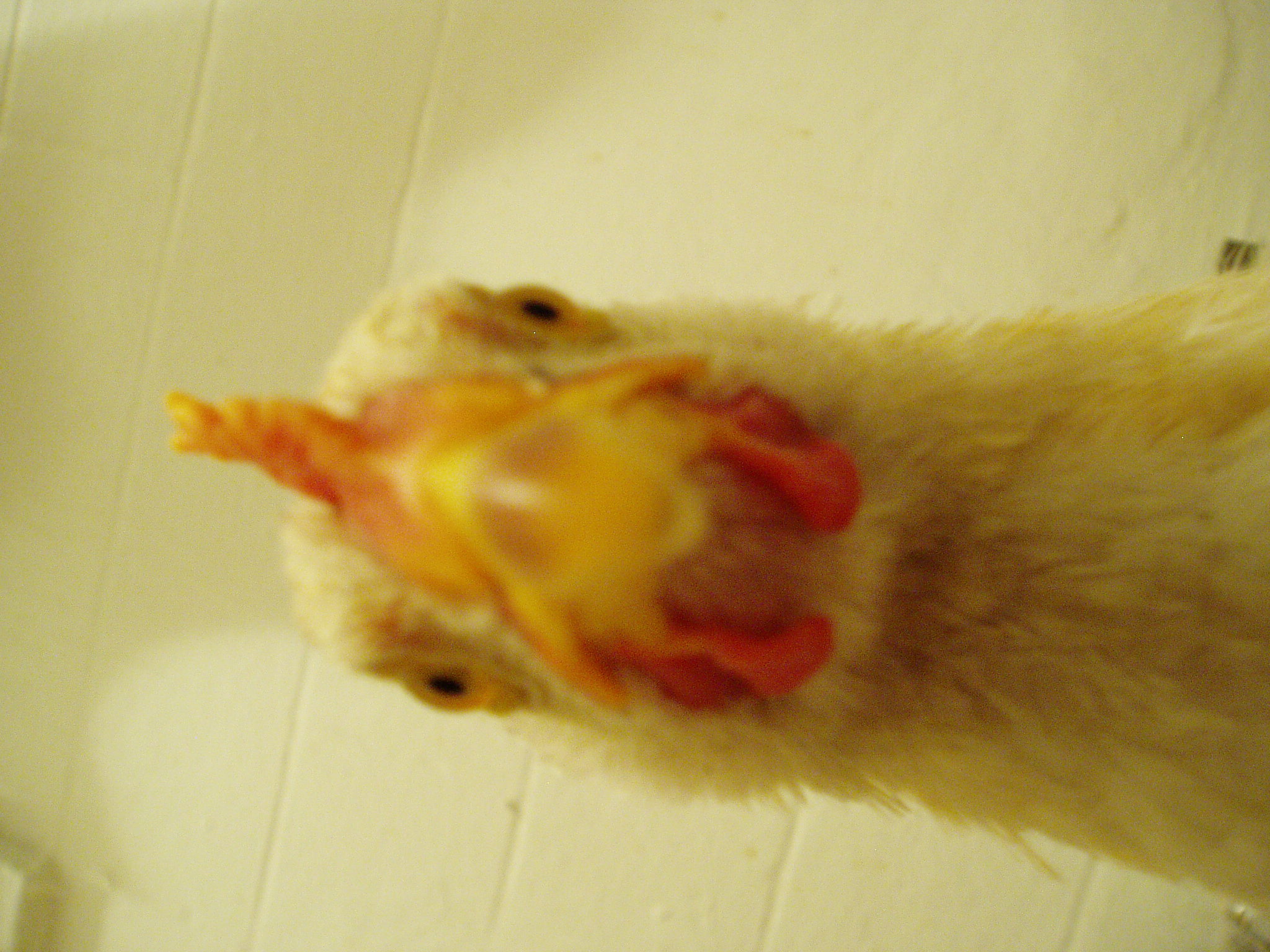 You have two hens. You want to get another hen. How many hens will you have total? How many eggs will you get? What will this do to the pecking order? Show your work. You may use a calculator if necessary.
Seriously, introducing a bird* to your flock can be a process. There are several things to consider:
1) Disease: Your birds and/or their environment may have a pathogen that could kill the new bird. For example, a bird may develop immunity to one of the nine strains of coccidia (common protozoans that are nearly ubiquitous with chicken flocks) and may not have time to develop immunity if introduced suddenly to a flock with a different strain.
2) Social interaction: Birds are flock animals and hierarchy and social structure are based on the pecking order. Who’s on top, who’s on the bottom, and who’s in between is very important. Sudden disruptions to that system may lead to serious injury or death for a bird.
3) Environmental change: Birds, because they are prey species, are by nature suspicious critters, very wary of new surroundings, sights, and sounds. Some birds will starve to death rather than make a diet conversion. Others will take a while to settle in to new surroundings and may appear shell-shocked and uncertain in a new place for a week.
What to do?
When introducing a new bird to my flock, I follow these steps:
1) Vet the bird. Any new avian resident gets a check up at the avian vet. We check for and treat diseases, communicable or not, and assess the general condition of the bird.
2) Quarantine the bird. Check with your avian vet to see what quarantine period he or she recommends. During the quarantine period, the new bird will probably show signs of any subclinical illness that might be present. If this happens, repeat Step 1! If not, move on to Step 3.
3) Introduce the bird slowly to the new flock.
A. I hear you… Place the new bird in a place where it can hear the other birds but not see them. This allows the new one to get used to the sounds of the flock, and it allows the flock to get used to another bird in the area.
B. I see you… After a few days, I move the new bird’s cage so all the birds can see each other. The new bird has time to observe interactions, see its new flock, and interact more closely with them.
C. So you’re my new neighbor! Allow the bird out of the cage to interact with the other members of the flock. I usually suggest supervision for this step, and that it be done in an open area, so that if anyone needs to beat a hasty exit, it can be done.
D. Moving in! If all goes well with Step C, try caging them together. Keep a close eye out for picking around the head and eyes. If there is any sign of this, remove the picked bird immediately. This bird may have to be caged separately and may not be integrated successfully into the flock.
*Hint: It is generally easier to introduce two new birds to a flock, rather than just one. Also, it can be difficult to introduce young birds to a flock of older birds, and bantams to a flock of standard-sized birds.
If there is no picking, then congratulations! You have successfully made an avian introduction! Now put down the calculator and give yourself an A for the day!
22 Jun
Photos from Green Day at the Lycée Français
My friend Jane helped me out with Green Day at the Lycée Français. It was non-stop kids! The hens were kind of stressed, but Jo Schmoe did really well. I think we saw all grades in 2.5 hours.
The older kids got to hold the hen; the younger kids got to touch. They were surprised by how soft she was. We had a few poop accidents, which caused quite a stir, too!
One of the most memorable kids was the little guy who kept asking if we were going to eat the chickens. He said he wanted fried chicken. When he got a chance to hold one of the hens, however, he decided she was too cool to eat!
The little ones were a little more timid, and generally they would hang back until one of their classmates was brave enough to touch the hen. Then everyone wanted to touch – all at the same time!
Enjoy the photos!
22 Jun
Mad City Chickens film showing 6/25/2010
CLUCK (Citizens of Lockport for Urban Chicken Keeping) will be sponsoring a screening of the Mad City Chicken documentary film this Friday, June 25th.
When you buy store bought eggs, you may be getting a lot more than you bargained for. Here is an article about the way store bought eggs are cleaned and how those chemicals get into our eggs. Yuck!
http://articles.mercola.com/sites/articles/archive/2010/06/08/why-you…
The safest and healthiest place to get eggs is your own back yard! Come this Friday, June 25th to find out more about the benefits of backyard chickens.
“MAD CITY CHICKENS”
MOVIE SCREENING FRIDAY – JUNE 25, 2010
7:00 to 9:00 PM
Central Square Building—Lockport, IL
222 E. 9th Street—3rd floor (Board Room)
16 Jun
Chick set-up photos
See my post Home to Roost Makes the Paper for background on these pix.
You can also check out the press coverage.
11 Jun
Victory Egg Garden from Days of Old Herb Farm
Here’s a link to the Victory Egg Garden, a chicken tractor that sits over a raised bed. Your hens work and fertilize the soil in a raised bed, then you move them along to a new site and plant the old site.
So combine your chickens with gardening, and forget about those compost bins!

 Home to Roost