June 8, 2013: Chicken-Keeping Class at Green Home Experts in Oak Park


Follow the Facebook link to register for my next chicken-keeping class, June 8, 2013, at Green Home Experts in Oak Park.

This class is designed for curious folks who are considering getting chickens, as well as for those who already have their own birds and who want to learn more! Come learn how to raise chicks, care for adult birds, and keep your neighbors happy!

5 happy hens email


Home to Roost at Plainfield Expo: May 4, 2013


Come out to the Spring Environmental Expo in Plainfield! Lots of great things going on! If you want to hear about chickens, I’ll be doing two presentations.

Event date: Saturday, May 4, 2013 – 10:00am to 3:00pm

Location:

Central High School Field House,

24120 W. Fort Beggs Drive,

Plainfield, IL 60544.

See map: Google Maps

This a FREE event hosted by Conservation Plainfield that includes exhibitors with educational displays, demonstrations of sustainable products and practices, sales of “green” products and services, and fun entertainment for all ages. It is a community-wide environmental education event and Conservation Plainfield’s primary fundraising activity for the year.

Some of the activities planned for the day include:

  • Dave DiNaso’s Traveling World of Reptiles (an up-close, live, hands-on experience about reptiles and amphibians from around the world). Visitwww.travelingworldofreptiles.com for more information.
  • Incredible Bats will be giving a multi-media presentation on how beneficial these creatures are to us and our world. Sharon and Dan Peterson have over 15 years of experience in the conservation of bats. They will have live Egyptian Fruit Bats and African Straw-Colored Fruit Bats at the show. Bring your digital cameras or camera phones because after the program a half an hour will be provided for children/families to take their own picture with a bat. Visit www.incrediblebats.com for more information.
  • Learn about and try Geo-Caching (an outdoor activity using a Global Positioning System – GPS receiver to hide and seek containers called geo-caches or caches that contain log-in sheets and sometimes trinkets). Visitwww.gonil.org for more information on geo-caching.
  • Workshop on wind energy (a renewable energy source) that includes the making of a wind turbine model you can take home. There will be two workshops with a maximum of 25 wind turbine model kits for each workshop – one model kit per family. If interested in attending this program, stop by the Conservation Plainfield welcome booth and register.
  • Learn about raising backyard chickens at home. There will be a presentation with live chickens on how to properly raise chickens at home and the benefits of doing so by Home to Roost Urban Chicken Consulting. The Midwest’s only chicken consultant, Jennifer Murtoff provides compassionate, homespun consulting and emergency care for backyard chickens in the Chicagoland area. A farmer’s granddaughter, Jennifer’s passion for fowl developed as she acquired a number of kinds of birds in south central Pennsylvania. Her flock included chickens, ducks, geese, turkeys, quail, peafowl, pigeons, and golden pheasants. She offers information and resources on chicken care from chick to adult, and, while she is not a veterinarian, can provide emergency advice and troubleshooting.
  • Exhibit on composting at home
  • An Electronics Recycling Drop-off will be provided by New Life Electronics Recycling (for a list of items that will be accepted, download the attachment on the homepage or down below).
  • An empty ink and toner cartridge recycling drop-off will be provided by Cartridge World, 4722 Caton Farm Road, Plainfield.
  • Conservation Plainfield will also be accepting batteries and cfl (compact fluorescent light) bulbs for recycling. Please be sure to tape both ends of the batteries prior to dropping them off.
  • Working Bikes will be accepting bicycle donations at the event.  The bikes do not have to be in working condition. Working Bikes collects and gives away over 6,500 used bicycles a year. They repair and give away bicycles to local social service agencies, as well as international non-profit bike projects that distribute them to those in need.
  • Make a Craft to Take Home (a fun activity for children and families to make something out of everyday materials you recycle at home).
  • Rain Barrel Sales (for more information on Conservation Plainfield’s Rain Barrel Program and to place an order, download the attachments on the homepage or down below). Starting March 23 and running through the expo, Conservation Plainfield will be holding a spring rain barrel sale. Rain barrels can be purchased for 25% off the regular price.
  • Native Plant Sale (download the order form on the homepage or down below). Please note that if you join Conservation Plainfield as a member you can get free plants. Individual memberships get three (3) free plants, and family memberships get six (6) free plants.
  • Raffling off of Gift Baskets and a Rain Barrel
    • Stop by Conservation Plainfield’s welcome booth and get one free raffle ticket.
    • Those that buy a 50/50 raffle ticket will get one additional ticket for the basket/rain barrel raffle.
    • Those that join Conservation Plainfield as an individual member will get three extra raffle tickets, and those that join as a family member will get five extra raffle tickets.
    • All items will be raffled off at 2:00. Winners will be posted at the Conservation Plainfield welcome booth. Winners need not be present.

Don’t forget to check back on occasion for updates on the day’s activities and exhibitors that will be participating because we are still planning and confirming other activities and in the process of booking exhibitors.

If you are interesting in volunteering to help set-up, break-down or work the event, please contact us.

Conservation Plainfield began as a collaborative effort of the five units of local Plainfield government: Village, Park District, School District, Library District, and Township. We have grown over the years and have become more volunteer-driven with membership comprised of nearly 50 residents and businesses. Our organization holds a series of events and projects each year, including clean-ups, park enhancement projects, and collection days. Conservation Plainfield relies on modest membership dues and public donations to meet its mission of environmental education and awareness. 

Chicken Diapers?


Chicken Diapers?

I don’t recommend chicken clothes or chickens as housepets, but if you want to go that route, here is one solution. 

REMINDER: Coop-building class at the Oak Park Conservatory May 7, 2013


Sign up for Home to Roost’s coop-building class!

Date: May 7, 2013

Time: 7 PM to 9 PM

Location: Oak Park Conservatory, Oak Park IL

We’ll discuss materials, coop components, basic specifications. Everything you need to know about building a chicken coop.

Click on the link to register.

New Chicks at Belmont Feed and Seed 4-19-2013


New chicks are expected at “Belmont Feed & Seed” tomorrow. 

-Isa Browns/Red Stars
-Amber Sex Links
-Buff Orpngtons
-Barred Rocks
There are Cuckoo Marans pullets, too. 

Coop-building Class: May 7 at 7 PM, Oak Park Conservatory


If you’re getting chicks, this is the class you’ll need to learn about building a safe and comfortable home for them! In this class, you’ll learn about the basic needs of adult chickens (they’re not fussy, really, but there are some things you need to know!). Find out the essential components of a coop, things to avoid when choosing construction materials, important construction tips, and see different coop styles.

Date: May 7
Place: Oak Park Conservatory, 615 Garfield Street, Oak Park, IL 60304
Time: 7 PM to 9 PM

 For more information, contact the Oak Park Conservatory.

Photo courtesy of Kathleen Gardiner

Fatty Hemorrhagic Liver (Hepatic Lipidosis) [CONTAINS GRAPHIC IMAGES]


Here’s the necropsy report for the day. Yesterday I visited a friend who has chickens in the city, and her birds were fine; today she called with a dead hen. The hen had died between 2 PM and 4 PM today.

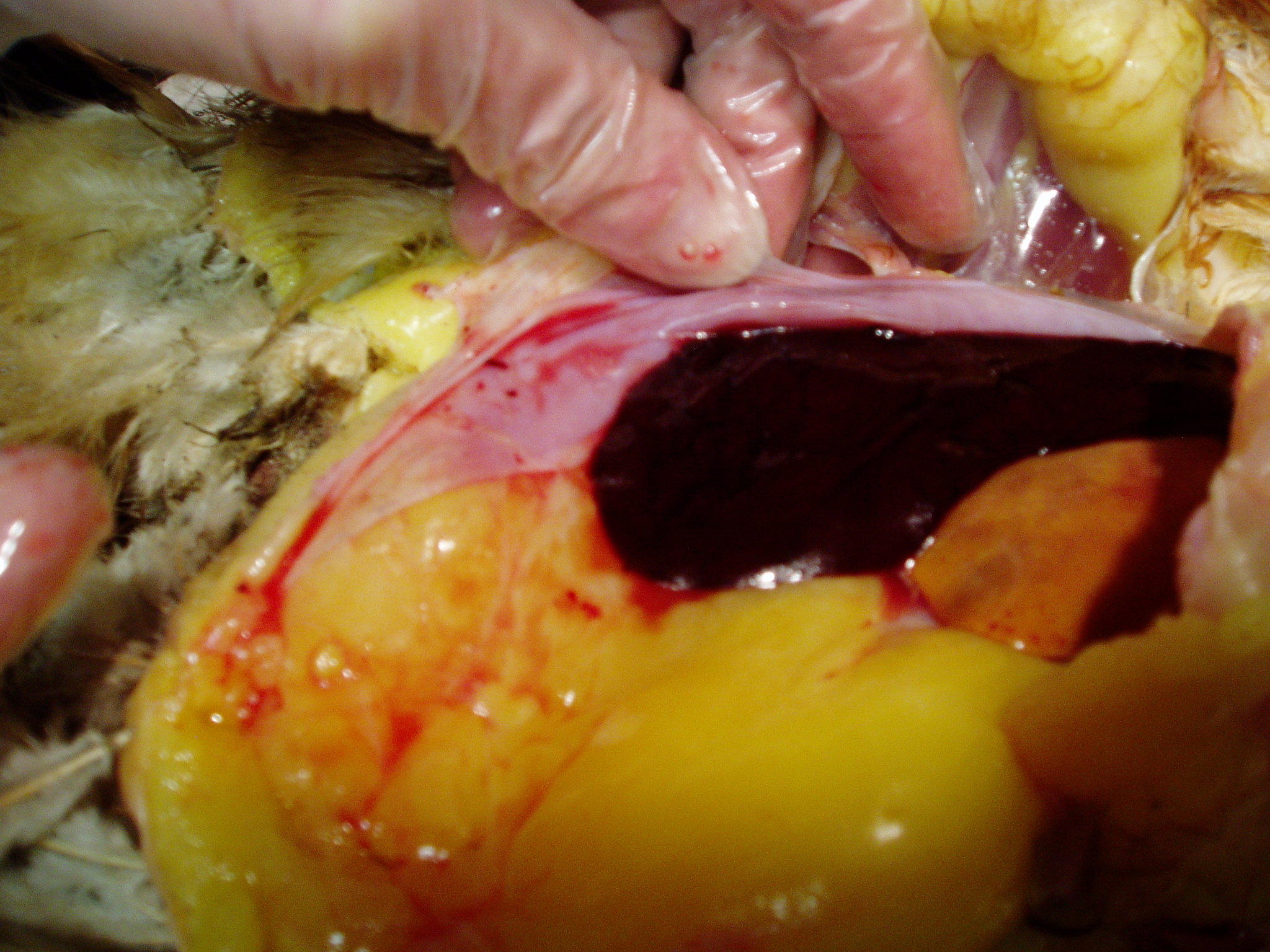
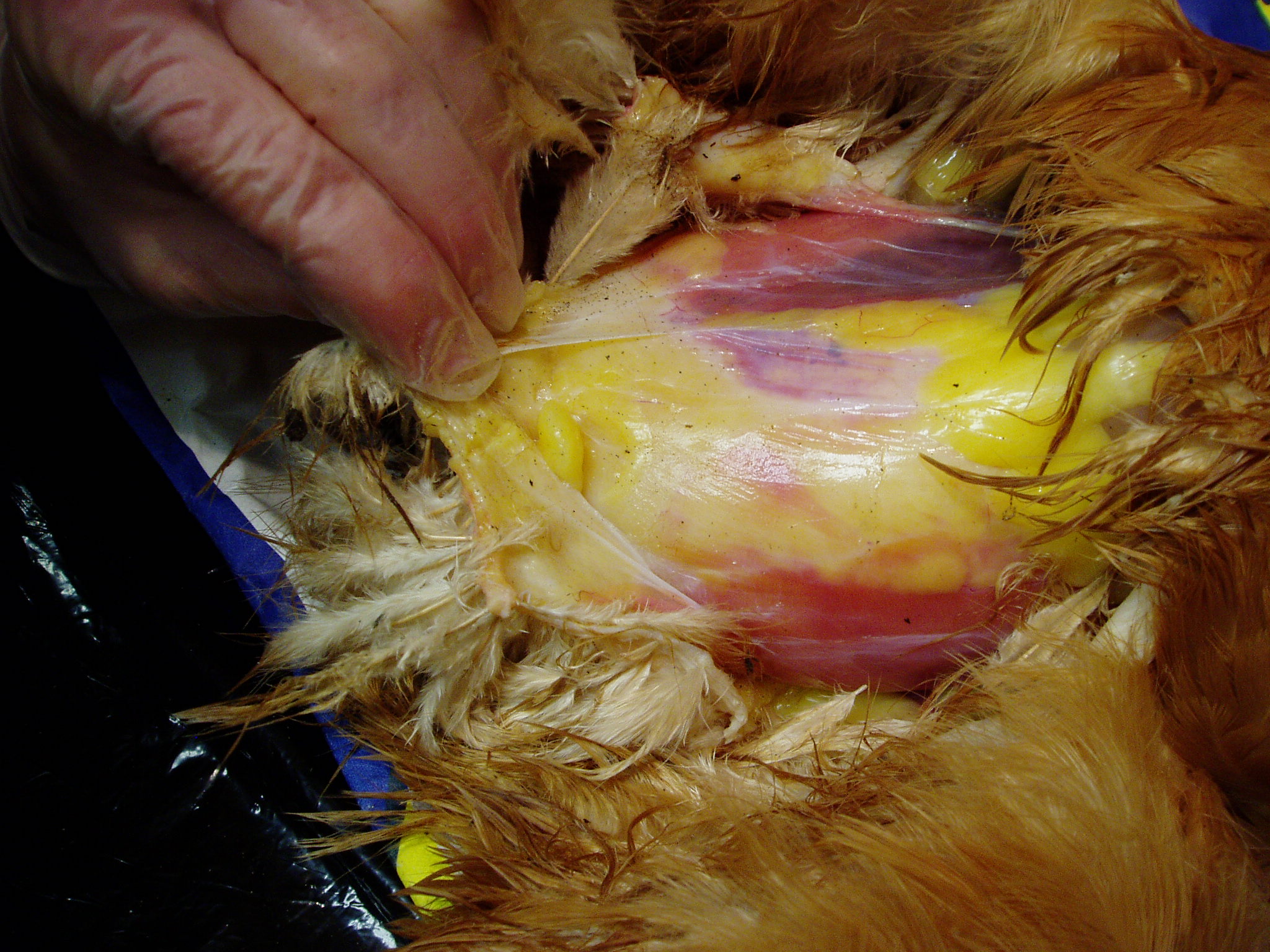
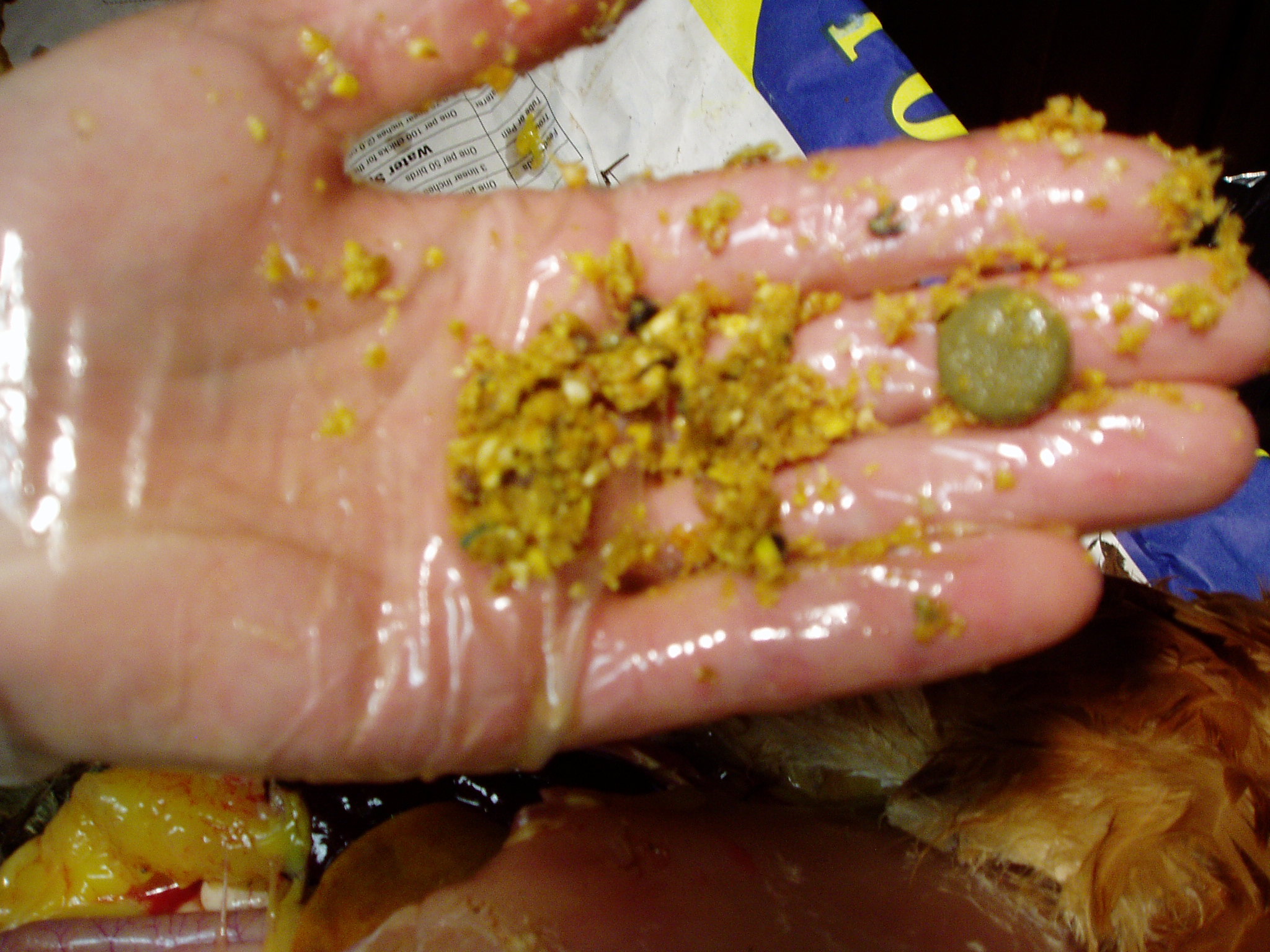
The hen had laid (and eaten part of) a soft-shelled egg. When I opened her up, I found a HUGE amount of fat and a massive amount of blood in the body cavity, seemingly a liver hemorrhage. In addition to the liver issues, she had a nice collection of ascaris (roundworms) in the intestinal tract (one was over 2 inches long). Her gizzard contained very little grit and a large amount of grains/vegetable matter and some plastic pieces.

Dr. Sakas of Niles Animal Hospital reviewed the necropsy pix and said that the underlying comdition was the fatty liver, and death was caused by an aneurysm. She died shortly after laying an egg, and the strain of egg laying can cause a hemorrhage.

Fatty liver disease (hepatic lipdosis) is also seen in caged birds (like parrots and parakeets) that are fed a diet of strictly seeds. A diet that is too nutrient dense, as well as lack of exercise, can cause fatty liver syndrome. Fat builds up in the liver and the body cavity and can cause shortness of breath, organ failure, egg binding, and hemorrhage. I’ve taken my parakeets off of a seed diet and put them on a pelleted formula for this reason. [NOTE: Diet conversion of caged exotics must be done slowly and under very careful observation. Birds to do not take to change well and can starve themselves to death during a diet conversion. Check with your avian veterinarian before trying this on your own.]

My friend doesn’t overload her birds with bread, mealworms, or other treats, but as I observed the birds eating from the feeder, they were picking out the bits of corn and leaving the mash. I advised her to feed a finely ground mash without the bits of corn, a crumble, or a pelleted food to prevent the hens from picking the “marshmallows” out of the “Lucky Charms” and leaving the “cereal” behind.

I also suggested minimizing the amount of food available to the birds, limiting it to about 1/4 lb per bird per day. More exercise would probably be beneficial, too.

The pictures below are not for the faint of heart!
The gizzard

The gizzard

Yellow fat with coagulated blood from liver hemorrhage

Yellow fat with coagulated blood from liver hemorrhage

Roundworm (Ascaris)

Roundworm (Ascaris)

Fatty liver with large blood clot to the left

Fatty liver with large blood clot to the left

Yellow fat in the body cavity
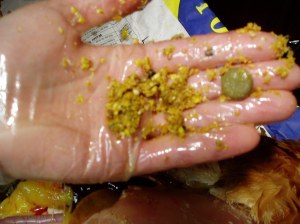
Yellow fat in the body cavity

Gizzard contents

Gizzard contents

Want to see if your city allows chickens?


Many municipalities have their laws online. See if you can find your location’s legal code. You can also see if your town is included in this site’s database. 


Thoughts on Roosters


A few thoughts on roosters from my ag colleague, Deborah Niemann, of Antiquity Oaks Farm Blog. Deborah is also a published author. You can read more about her and her books on her website. 

We were vegetarians for 14 years when we got chickens, and we never had any intention to start eating chicken or any other meat for that matter. I bought three roosters with my 24 hens so that they could set and hatch chicks and continue the cycle of life, and I didn’t mind the idea of having more than the recommended number of roosters because they are so pretty, and I thought (naively) that beauty should be valued as much as eggs.

After two years, we had 40 hens and 24 roosters. Well, as beautiful as the roosters were, the hens looked horrible. Almost all of them had bald backs, no feathers, and raw skin from being mated constantly. Roosters have a non-stop drive to reproduce, so they are chasing hens and jumping on their backs all day long. When you have one rooster for every ten hens, it’s not a big deal. When you have more than one rooster for every two hens, the poor girls are literally “run ragged.”

One day I walked into the barn and discovered that one of the roosters was completely blind and had one eye that had been completely pecked out. I knew the roosters had been fighting, and I’d break it up when I saw it, but I couldn’t be around 24 roosters 24/7. My husband and I argued about putting him down or having him live out his life in a cage, and by the time I’d convinced my husband to chop off his head, he had died. A week later, we went through the same thing again, and by the third time this happened in two weeks, we realized that the roosters were very unhappy with all the competition and were seeking some type of equilibrium. We could either let them continue killing each other, or we could reduce the playing field ourselves. After much debate, we decided that a quick ax to the neck would be far more humane than letting them kill each other slowly. When they fight, they peck at each others’ heads until one is blind and/or brain damaged. This does not lead to a quick death.

We have 32 acres, and although we have fencing to keep out coyotes, the chickens can go through or fly over it if they want, and some of them do. We once had a couple of “brother” roosters who would range out about ten acres, and one day we found one of them staring into space in the corner of the chicken house. We had seen them fighting the day before. So, although hens don’t fight if they have plenty of space, having enough space is not the issue for roosters who are testosterone-driven.

Allowing roosters to live out their natural life is a really nice idea, and one which I thought I could achieve — before I actually tried. I suppose you could keep them caged by themselves, but I don’t see that as a terribly fulfilling life. If you want eggs, roosters will die somewhere, sometime. Either you buy sexed pullets, and the left-over cockerels die at the hatchery, or you buy straight-run, and the roosters live a few months before becoming dinner or perhaps a little longer before they kill each other. No, not every rooster will die in those fights, but I can tell you that even the winners look like they’ve suffered a lot of pain.

Penny

Upcoming Events


Saturday, April 13: 

Saturday, April 20: Earthfest, Oak Park, IL

Saturday, April 27: Kenosha Market, Kenosha, WI, information to come

Saturday, May 4: Plainfield Expo, Plainfield, IL

Chicken-keeping classes, Plainfield, IL, information to come

Saturday, June 1: Chicken health workshop, information to come