
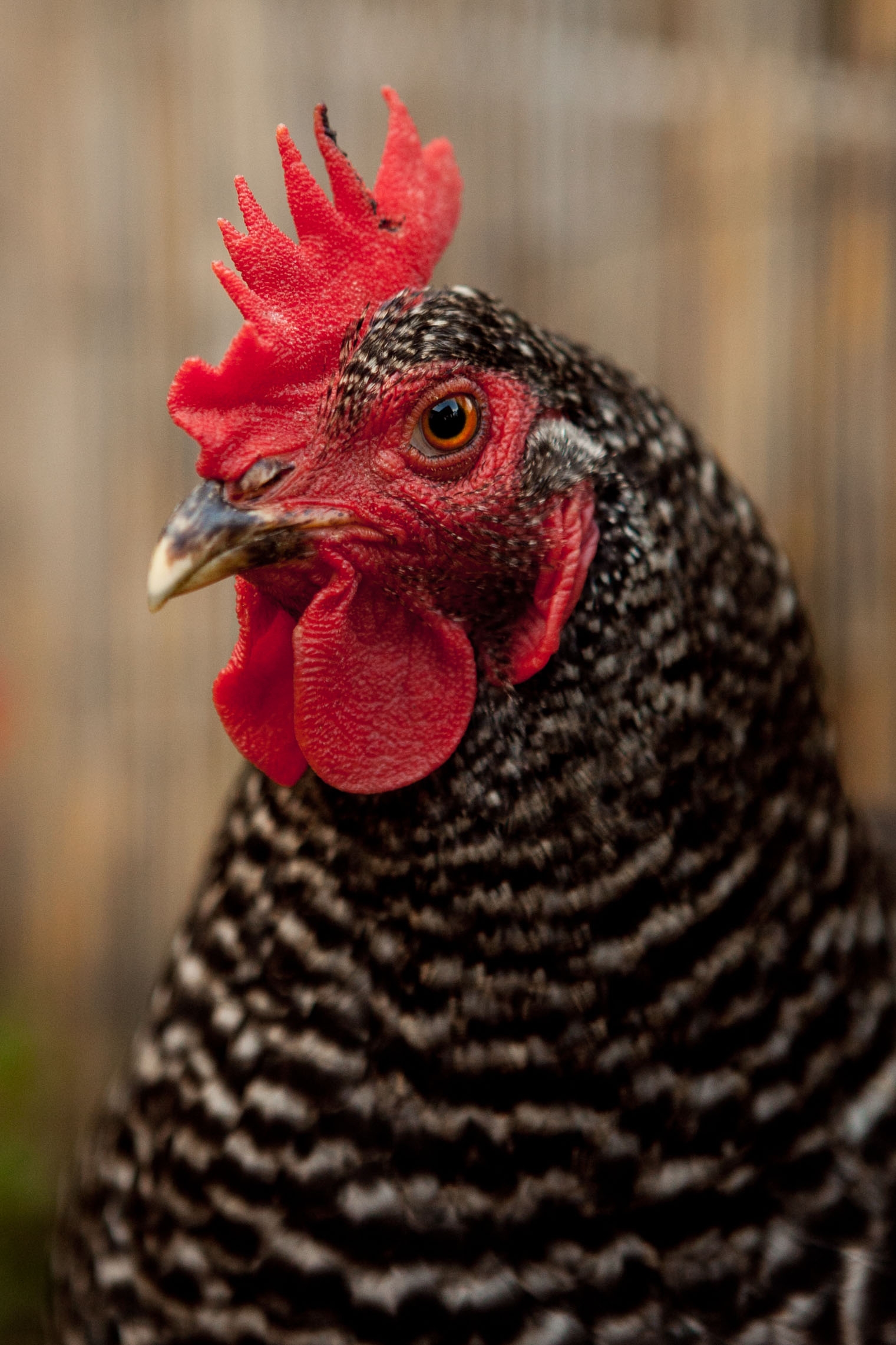
Photo courtesy of Sandy Alguire
The urban agriculture movement includes everything from gardens to goats, with chickens in between. If you’re thinking about getting chickens, you’ll want to keep in mind of a few things in advance.
1) Chicks require special care. Baby chicks need appropriate warmth, shelter and diet if they are not with a hen who can protect them and show them the ropes.
2) You’ll get fewer eggs as your hens get older. A hen’s ability to lay peaks at the end of her second year. After age two, she’ll lay fewer eggs per week. Chickens can live to be as many as 10 years old, so consider this in your plans. Are these birds pets who will give you eggs steadily for a few years? Or are they egg-laying machines that will be turned into soup when their laying slows down?
3) Chickens are different from cats and dogs. Birds and mammals are different in the ways they approach the world. For example:
- Chickens are prey animals; dogs and cats are predators.
- Their body systems function differently (for example, chickens have very sensitive respiratory systems and hollow bones).
- They respond to stress in different ways.
- Chickens need to go to an avian veterinarian, rather than a dog and cat vet.
4) The pecking order is an important reality. Chickens naturally rank themselves in a hierarchy to determine who is the alpha hen. If you introduce new birds to an existing flock, you may not only introduce disease, but you may also disrupt the pecking order, which can result in death for the newcomer.
5) A quality, secure coop is important. Chickens are susceptible to predators such as raccoons, hawks and coyotes. Do your research to determine how best to protect them. You should have a safe, sturdy coop ready well before your chicks are ready to move into it. You should lock your birds in the coop at dusk and let them out first thing in the morning.
6) Chickens are a daily commitment. Again, chickens are different from dogs and cats; you cannot provide extra food and water for your birds and go out of town for several days. Plan to feed, water, and gather eggs both morning and evening and find a chicken sitter if you go on vacation.
7) Diet is important. There are several different formulations of feed, each for different stages in a chicken’s life: chick starter, chick grower, and laying formula. Chickens can eat kitchen scraps, but a properly formulated feed should be the primary source of nutrition. I recommend providing supplemental calcium for laying hens and it’s important to note that treats like scratch and meal worms can cause birds to become fat, leading to laying problems and other health issues.
8) You are the first line of defense for your birds’ health. Birds hide signs of illness so it will be very important to know what is normal for your chickens: weight; food/water intake; respiration; social, sleep, and grooming habits; etc.
9) Chicken owners are chicken ambassadors. If you get chickens, you join the ranks of a group of people who are trying something new. With that privilege comes responsibility: to represent yourself and your fellow chicken keepers well to your community. Therefore, it’s important to educate yourself about chickens by taking a class (Home to Roost Urban Chicken Consulting offers several per year, as well as in-home consultations), reading quality materials (see the Resources tab on the blog Home to Roost Urban Chicken Consulting blog), and visiting the coops of successful chicken keepers. You can also join online forums, such as the Chicago Chicken Enthusiasts Google Group.


 Home to Roost