Archive for the ‘Uncategorized’ Category

Market research study for Chicagoland chicken keepers, $175, Aug. 8


Chicagoland chicken keepers, earn $175 for your opinions! 

If you qualify for and participate in a two-hour market research survey on August 8 in Schaumburg, you’ll receive compensation of $175. Interested? Click on this link and fill out the survey. Then watch for a call/voicemail from 847-413-9060. 

Learn to Raise Chickens—For Free! Come to Home to Roost’s Chicken-Keeping Classes


If you’ve ever dreamed of collecting fresh eggs from your own backyard or are curious about raising chickens in an urban setting, now’s your chance to learn—at no cost!

Poultry educator and chicken consultant Jennifer Murtoff is offering four free chicken-keeping classes at public libraries throughout the Chicagoland area. These beginner-friendly sessions cover everything from legal requirements and coop setup to feeding and keeping your birds healthy. Whether you’re a complete novice or looking to brush up on best practices, these engaging classes will help you feel confident and prepared.

Upcoming Class Information

Alsip Public Library
Monday, July 14 at 6:00 PM
11910 S. Kostner Ave, Alsip, IL 60803
(To be held outside in the garden of Prairie Jr. High School)            
(708) 371-5666
No registration required.
Visit the Alsip Public Library events calendar

Des Plaines Public Library
Thursday, July 31 at 6:30 PM
1501 Ellinwood St, Des Plaines, IL 60016
(847) 827-5551
Register Here

Lisle Public Library
Saturday, September 13 at 2:00 PM
777 Front St, Lisle, IL 60532
(630) 971-1675
Check the Lisle Public Library events calendar closer to the date

Woodstock Public Library
Tuesday, September 23 at 5:30 PM
414 W Judd St, Woodstock, IL 60098
(815) 338-0542
Check the Woodstock Public Library events calendar closer to the date

These free classes are a great way to learn about chicken care, meet fellow backyard chicken enthusiasts, and get your questions answered. Space may be limited, so check with each library to confirm registration requirements and location details.

Home to Roost Featured In Redfin Article


Need some ideas for your coop? Whether you’re planning to raise chickens at home in Asheville, NC, Eugene, OR, or Burlington, VT, check out this Redfin article featuring Home to Roost and other chicken experts: 5 Chicken Coop Ideas for a Thriving Flock.

Join Home to Roost for two FREE chicken-keeping classes!


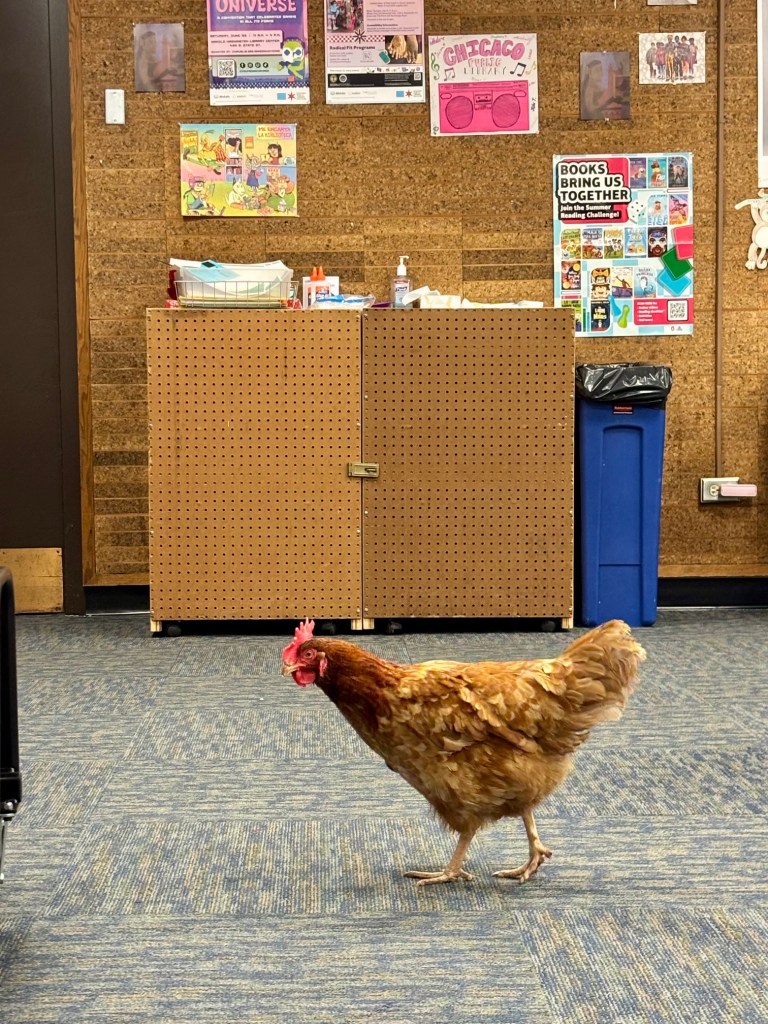
Learn the basics of keeping backyard birds and meet a live chicken. Registration is recommended.

May 10, 1–3 pm
Homewood Public Library
17917 Dixie Hwy, Homewood, IL 60430
Register Here

May 22, 6–8 pm
Palos Park Public Library
12501 S 71st Ave, Palos Heights, IL 60463
Register Here

Meet Live Chickens at SCARCE’s Growin’ Green Garden Market!


Join Home to Roost at the Growin’ Green Garden Market on Saturday, May 3, 2025, from 9 AM to 1 PM at the SCARCE Environmental Education Center on 800 S Rohlwing Rd (IL 53), Addison IL (Note: Located on west side of Rohlwing Rd, about 1/2 mile north of North Ave).

We’ll be there with live chickens—stop by to say hello and learn more about backyard poultry! Don’t miss this fun and educational day for the whole family!

Free Class at the Chicago Public Library!


Join Home to Roost on 4/12 for a FREE chicken-keeping class at the West Belmont Chicago Public Library! Learn the basics of keeping backyard birds and meet a live chicken. Registration is recommended.

April 12, 2–4 pm
Chicago Public Library, West Belmont
3104 N. Narragansett Ave.
Chicago, IL 60634
Register here

Backyard Chickens: What to Know Before You Hatch a Plan


Thinking about getting chickens? 

Egg prices are skyrocketing, and your first thought may be, “I’ll get some chickens!” Even though baby chicks are cute and inexpensive, consider the following before you take the plunge:

  • Chickens live anywhere from 4 to 10 years. Their peak of lay is the first 2 to 3 years of life. And it takes 5 to 6 months before they start laying.
  • You’ll need a solidly built coop to keep them safe and happy. It’s best to build it yourself of quality materials, rather than buying a cheap prefab coop.
  • Like other animals, chickens get sick. Vet care is the most humane option and is part of responsible animal ownership. It is also expensive.
  • Chickens are a 24/7 commitment. If you go out of town, you’ll have to find someone to tend them morning and evening.
  • Laying hens need proper nutrition to keep their bodies healthy. This includes specially formulated feed.
  • You’ll need to take precautions to prevent lice and mites, as well as rodents, from finding your birds and your coop.
  • There are few farms that want to take chickens when they no longer fit their owners’ lifestyle.
  • Chickens are different from dogs and cats; they’re a prey species, and they’re birds. Their bodies work differently from those of mammals, and they think about the world differently.

Before bringing chicks home, educate yourself on what’s involved in chicken keeping: Take a class, read books, watch YouTube videos. Be prepared for this commitment to ensure those chicks have a safe forever home.

Home to Roost LLC offers in-home consultations as well as classes at local libraries. Contact us to schedule an in-home consultation or join us for one of our library classes!

April 12, 2–4 pm
Chicago Public Library, West Belmont
3104 N. Narragansett Ave.
Chicago, IL 60634
Register here

May 10, 1–3 pm
Homewood Public Library
17917 Dixie Hwy
Homewood, IL 60430
Register here

Chicken Vets in the Chicagoland Area


If you have a cat or a dog, it’s easy to find a vet, even in a pinch. But it’s harder to find a vet who’ll treat a chicken. You’ll want to find a vet who is a member of the Association of Avian Veterinarians (AAV), and there are not as many avian vets as there are cat and dog vets. Avian vets understand the anatomy and physiology of birds, which are different from those of mammals. 

If you’re able to take your chicken to a vet, it’s important to establish a relationship with an avian vet before your bird needs their services. Because there are fewer avian vets, they are often overbooked: it may be easier to get an appointment as an existing or long-term patient.

Home to Roost LLC, while not a veterinary service, offers troubleshooting and advice in emergencies, and vet referrals for chickens and other birds. We endorse the following avian vet practices in the Chicagoland area.

AURORA

Indian Prairie Animal Hospital

Address: 1195 S Frontenac Street, Aurora, IL 60504
Phone Number: (630) 820-6999
Website: Indian Prairie Animal Hospital
Certified Avian Vet: None; AAV members

Indian Prairie Animal Hospital has been providing veterinary care for birds, including chickens, since 1984. While they do not have a board-certified avian veterinarian on staff, their veterinarians are members of the Association of Avian Veterinarians (AAV) and have extensive experience treating a wide range of avian species.

The practice offers general wellness care, diagnostics, and treatment for common avian health concerns. They do not provide in-house emergency services but refer after-hours and urgent cases to Veterinary Emergency Group (VEG) or Midwest Animal Hospital.

CHICAGO 

Animal House of Chicago

Address: 2752 W Lawrence Ave Suite 3, Chicago, IL 60625
Phone Number: (773) 878-8002
Website: Animal House of Chicago
Certified Avian Vet: Dr. Byron de la Navarre

Dr. Byron de la Navarre is the chief of staff at Animal House of Chicago. The practice, established in 2003, treats a variety of pets including birds. Dr. de la Navarre is an active member of the Association of Avian Veterinarians (AAV) and serves as the Illinois State Liaison.

The practice offers comprehensive veterinary care including preventative care, nutritional advice, and emergency services for birds and other exotic pets. In-house diagnostic capabilities include full blood and chemistry work, cytology, radiology, endoscopy, and ultrasound. 

Veterinary Emergency Group, Lincoln Park 

Address: 755 W. North Avenue, Chicago IL 60610
Phone Number: (312) 757-5444
Website: Veterinary Emergency Group, Lincoln Park 

VEG provides emergency care only. While they do not have an avian vet on staff, they can stabilize a chicken and treat symptoms until the bird can be seen by an avian vet at another practice. There are additional locations in Oak Brook, Naperville, the South Loop, and Buffalo Grove.

GLENWOOD

Glenwood Village Pet Hospital

Address: 555 Glenwood-Lansing Rd, Glenwood, IL 60425
Phone Number: (708) 758-2400
Website: Glenwood Village Pet Hospital
Certified Avian Vets: Dr. Katy Parr, Dr. Amanda Hernandez

Glenwood Village Pet Hospital sees chickens, and they offers surgeries, necropsies, X-rays, and ultrasounds (usually available with a one-week notice). The practice performs some lab work in house and may send out other fecals, cultures, and bloodwork. They can hospitalize critically ill patients, though there is no overnight staff for monitoring. Hospitalized patients still benefit from treatments like injections, fluids, and gavage feeding, which are typically impractical at home.

LISLE

Ness Exotic Wellness Center

Address: 1007 Maple Ave, Lisle, IL 60532
Phone Number: (630) 737-1281
Website: Ness Exotic Wellness Center
Certified Avian Vets: Dr. Robert Ness, Dr. Richard Nye

Ness Exotic Wellness Center has a team of certified avian veterinarians, including Dr. Robert Ness and Dr. Richard Nye. They offer comprehensive care for birds, including diagnostics, emergency services, and holistic and specialized treatments.

The clinic is well equipped with an in-house lab and advanced medical technology to ensure prompt and effective care for avian patients. Ness Exotics provides emergency services during office hours and various specialized treatments for avian species.

LOMBARD

Lombard Veterinary Hospital

Address: 244 E St Charles Rd, Lombard, IL 60148
Phone Number: (630) 627-7090
Website: Lombard Veterinary Hospital

Dr. Zachary Kline at Lombard Veterinary Hospital, while not an AAV certified vet, provides quality veterinary services for birds. The hospital offers a range of services including emergency care, urgent care, surgeries, and in-house lab diagnostics. Problems they commonly see in birds like chickens, quail, and turkeys include upper respiratory infection, bumblefoot, gastrointestinal bacterial or fungal overgrowth, egg binding, feather mites, and worms/protozoans in the GI tract.

NILES

Niles Animal Hospital and Bird Medical Center

Address: 7278 N. Milwaukee Ave., Niles, IL 60714
Phone: (847) 647-9325
Website: Niles Animal Hospital and Bird Medical Center
Certified avian vets: Dr. Jamie Abete

Dr. Abete, the practice owner, is interested in all avian species, as well as exotics and cats and dogs. She was involved in wildlife rehibilitation at Ross University through the school’s chapter of AAV (Association of Avian Veterinarians). The practice provides a wide variety of services, including in-house laboratory services, surgical care, screening tests, and specialist referrals. 

NORTH AURORA

Animal House Veterinary Hospital

Address: 356 N Randall Rd, North Aurora, IL 60542
Phone Number: (630) 701-1372
Website: Animal House Veterinary Hospital
Certified Avian Vet: Dr. Mary Grabowski

Dr. Mary Grabowski at Animal House Veterinary Hospital in St. Charles provides veterinary care for birds, including chickens. The hospital offers various services such as surgeries, diagnostic imaging, and emergency care.

SKOKIE

Blue Pearl

Address: 3735 Dempster St., Skokie, IL 60076 
Phone Number: (847) 673-9110
Website: Blue Pearl

This emergency group works in conjunction with Chicago Exotics and can stabilize a bird until it can be transferred to an avian veterinary practice. There is an additional location in Northfield.

Chicago Exotics Animal Hospital

Address: 3757 W. Dempster St., Skokie, IL 60076
Phone Number: (847) 329-8709
Website: Chicago Exotics Animal Hospital
Certified Avian Vets: Dr. Susan Horton, Dr. Ellen Boyd

The whole Chicago Exotics team treats chickens and poultry, and Dr. Ellen Boyd did her graduate work on chickens and poultry. The practice offers many in-house labs and other services. As an exotics-exclusive practice, they understand the need for immediate lab results. Their in-house diagnostic capability includes full blood and chemistry work, cytology, radiology, endoscopy, ultrasound, and surgery. The warm exotic ICU features avian incubators, avian nebulizer units, and inline oxygen for all cages. Chicago Exotics is especially bird friendly! They can do home visits for large flocks, surgery, CT, acupuncture, chiropractic care, cold laser treatments, and many others. The practice also offers 24-hour critical care services in association with their emergency partners, including Blue Pearl Skokie.

INDIANAPOLIS

Avian and Exotic Animal Clinic of Indianapolis

Address: 9330 Waldemar Rd, Indianapolis, IN 46268
Phone Number: (317) 879-8633
Website: Avian Exotic Animal Clinic of Indianapolis
Certified Avian Vet: Dr. Angela Lennox

Dr. Angela Lennox at Avian Exotic Animal Clinic of Indianapolis specializes in the care of exotic animals, including birds. The clinic provides a wide range of services, including diagnostics, surgeries, and emergency care and employs the state’s only board-certified avian and exotic mammal specialists.

Bird Flu in Matteson, IL


An egg-laying flock in Matteson, Illinois, about 30 miles from Chicago, was infected with bird flu, likely from contact with wild birds in the birds’ living space.
https://www.youtube.com/watch?v=5vxkBWrTPWo

Bird Flu in Northern Illinois: How to Keep Your Chickens Safe


Avian influenza, commonly known as bird flu, has been spreading in northern Illinois, particularly in areas like Woodstock that are along major migratory routes. This map from the CDC shows where the virus was detected in wastewater as of January 2, 2025. 

The virus can kill chicken flocks, both commercial and backyard, so it’s important for chicken keepers in this area to be aware and take precautions. 

How Bird Flu Spreads

There are several different strains of the bird flu virus, including the H5N1 variety, which can transfer to humans. The virus spreads when chickens come into contact with infected birds. Chickens and other fowl can also contract the virus through indirect contact including shared water and soil or other surfaces contaminated with droppings. Wild waterfowl, like ducks and geese, can carry the virus without showing symptoms and are a major source of infection for domesticated birds. They may release droppings when flying, which contaminate areas where chickens forage.  

Risks to Humans and Chickens

The Illinois Department of Public Health (IDPH) warns that the H5N1 strain of bird flu can infect humans through contact with infected birds or contaminated surfaces. Human symptoms include fever, cough, severe respiratory distress, and conjunctivitis, among others. These symptoms may resemble other respiratory illnesses and require careful clinical evaluation for accurate diagnosis. Early detection and treatment are critical.

Poultry specialist Dr. Anne Staudenmaier states that the symptoms of the virus in chickens can vary, depending on the strain. Some symptoms may be caused by other conditions, but there is always concern when multiple birds in a flock show signs in a short period of time, as opposed to just one bird, or over a period of weeks or months. These signs include:

  • Decreased egg production or abnormal eggs
  • Swelling of the head/comb/wattles/eyelids
  • Purple discoloration of the wattles/comb/legs
  • Nasal discharge, coughing, sneezing
  • Diarrhea
  • Lack of coordination
  • Decreased appetite
  • Sudden death

For chickens, bird flu is highly lethal, with survivors often carrying and spreading the virus, including to other flocks. These outbreaks can cause significant economic losses and disrupt poultry operations, emphasizing the need for stringent biosecurity measures.

While not all strains of avian flu are deadly, the virus is similar to the human flu virus: it mutates and changes over time, meaning there is always a chance a virulent strain that could affect humans may develop. In fact, recent reports show bats carrying several new avian influenza strains. For this reason, it is critical to manage avian influenza effectively. For more details, refer to the Illinois Department of Public Health’s advisory.

Protecting Your Backyard Flock

Wild birds are responsible for most cases of transmission to backyard flocks. Shore birds and waterfowl are considered to be natural hosts for influenza viruses and often spread disease during migration. Illinois is on a major migration path, called the Mississippi River flyway, which puts resident flocks at higher risk. To protect your flock, Dr. Geoff Lossie, formerly of Purdue University, points to the importance of biosecurity, especially now:

  • Limit the amount of contact that wild birds have with your birds, including access to food and housing.
  • Avoid hunting waterfowl because hunters can bring the virus back to their flocks.
  • Limit all unnecessary visitors, especially those who have their own poultry.
  • Do not interact with other keepers’ birds.
  • Do not share poultry equipment (feed/water dishes, cages, incubators, etc.) with other keepers.
  • Keep birds in an enclosed area with a roof to prevent contact with droppings from infected waterfowl flying overhead.   

Dr. Lossie suggests reading the information here

What to Do if Your Flock is Infected

According to the USDA, if birds exhibit show symptoms of avian flu or might have been exposed to birds with the disease, producers or bird owners should immediately notify federal or state animal health officials. All bird owners, whether commercial producers or backyard enthusiasts, should continue to practice good biosecurity, prevent contact between their birds and wild birds, and report sick birds or unusual bird deaths to state/federal officials, either through their state veterinarian or through USDA’s toll-free number at 1-866-536-7593. Additional information on biosecurity for backyard flocks can be found at Healthy Birds.

Local Recommendations

Health officials in DuPage County urge residents to follow these recommendations, as outlined by the DuPage Forest Preserve District:

  • Avoid feeding wild waterfowl. This will invite the birds to flock in a specific area, which can allow the virus to spread. It also increases risk of human contact. 
  • Feeders for songbirds are generally low risk. Do clean and disinfect the feeders when refilling. 
  • If you see more than five sick or dead birds in an area, report it immediately to the Illinois Department of Natural Resources (IDNR) wildlife biologist for DuPage County.
  • Safely dispose to dead birds, following the guidelines on the DuPage County Health Department avian flu webpage.
  • Keep pet birds and other fowl inside until risk decreases, or keep them in an enclosure with a roof that wild birds cannot enter.
  • Wildlife rehabbers may be limited in their operations due to tighter restrictions, so be understanding if they are unable to admit certains species.

For More Information

By staying informed and proactive, you can help safeguard your flock and reduce the spread of avian influenza.