Archive for the ‘Chicken care’ Category

Nine Things to Consider Before Bringing Chickens to Your Backyard


Alguire garden2

Photo courtesy of Sandy Alguire

The urban agriculture movement includes everything from gardens to goats, with chickens in between. If you’re thinking about getting chickens, you’ll want to keep in mind of a few things in advance.

1) Chicks require special care. Baby chicks need appropriate warmth, shelter and diet if they are not with a hen who can protect them and show them the ropes.

2) You’ll get fewer eggs as your hens get older.  A hen’s ability to lay peaks at the end of her second year. After age two, she’ll lay fewer eggs per week. Chickens can live to be as many as 10 years old, so consider this in your plans. Are these birds pets who will give you eggs steadily for a few years? Or are they egg-laying machines that will be turned into soup when their laying slows down?

3) Chickens are different from cats and dogs. Birds and mammals are different in the ways they approach the world. For example:

  • Chickens are prey animals; dogs and cats are predators.
  • Their body systems function differently (for example, chickens have very sensitive respiratory systems and hollow bones).
  • They respond to stress in different ways.
  • Chickens need to go to an avian veterinarian, rather than a dog and cat vet.

4) The pecking order is an important reality. Chickens naturally rank themselves in a hierarchy to determine who is the alpha hen. If you introduce new birds to an existing flock, you may not only introduce disease, but you may also disrupt the pecking order, which can result in death for the newcomer.

5) A quality, secure coop is important. Chickens are susceptible to predators such as raccoons, hawks and coyotes. Do your research to determine how best to protect them. You should have a safe, sturdy coop ready well before your chicks are ready to move into it. You should lock your birds in the coop at dusk and let them out first thing in the morning.

6) Chickens are a daily commitment. Again, chickens are different from dogs and cats; you cannot provide extra food and water for your birds and go out of town for several days. Plan to feed, water, and gather eggs both morning and evening and find a chicken sitter if you go on vacation.

7) Diet is important. There are several different formulations of feed, each for different stages in a chicken’s life: chick starter, chick grower, and laying formula. Chickens can eat kitchen scraps, but a properly formulated feed should be the primary source of nutrition. I recommend providing supplemental calcium for laying hens and it’s important to note that treats like scratch and meal worms can cause birds to become fat, leading to laying problems and other health issues.

8) You are the first line of defense for your birds’ health. Birds hide signs of illness so it will be very important to know what is normal for your chickens: weight; food/water intake; respiration; social, sleep, and grooming habits; etc.

9) Chicken owners are chicken ambassadors. If you get chickens, you join the ranks of a group of people who are trying something new. With that privilege comes responsibility: to represent yourself and your fellow chicken keepers well to your community. Therefore, it’s important to educate yourself about chickens by taking a class (Home to Roost Urban Chicken Consulting offers several per year, as well as in-home consultations), reading quality materials (see the Resources tab on the blog Home to Roost Urban Chicken Consulting blog), and visiting the coops of successful chicken keepers. You can also join online forums, such as the Chicago Chicken Enthusiasts Google Group.

June 8, 2013: Chicken-Keeping Class at Green Home Experts in Oak Park


Follow the Facebook link to register for my next chicken-keeping class, June 8, 2013, at Green Home Experts in Oak Park.

This class is designed for curious folks who are considering getting chickens, as well as for those who already have their own birds and who want to learn more! Come learn how to raise chicks, care for adult birds, and keep your neighbors happy!

5 happy hens email


Coop-building Class: May 7 at 7 PM, Oak Park Conservatory


If you’re getting chicks, this is the class you’ll need to learn about building a safe and comfortable home for them! In this class, you’ll learn about the basic needs of adult chickens (they’re not fussy, really, but there are some things you need to know!). Find out the essential components of a coop, things to avoid when choosing construction materials, important construction tips, and see different coop styles.

Date: May 7
Place: Oak Park Conservatory, 615 Garfield Street, Oak Park, IL 60304
Time: 7 PM to 9 PM

 For more information, contact the Oak Park Conservatory.

Photo courtesy of Kathleen Gardiner

Fatty Hemorrhagic Liver (Hepatic Lipidosis) [CONTAINS GRAPHIC IMAGES]


Here’s the necropsy report for the day. Yesterday I visited a friend who has chickens in the city, and her birds were fine; today she called with a dead hen. The hen had died between 2 PM and 4 PM today.

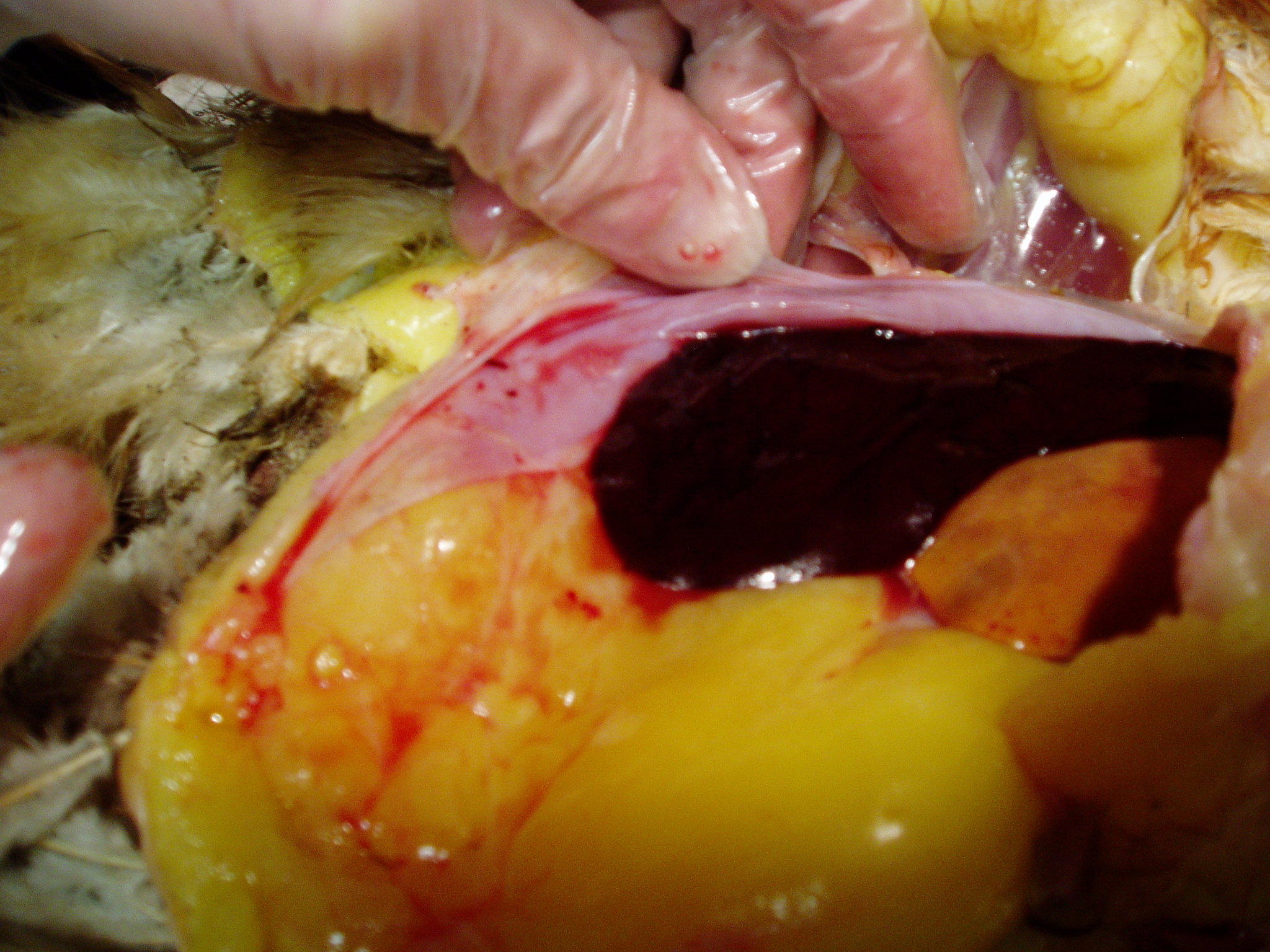
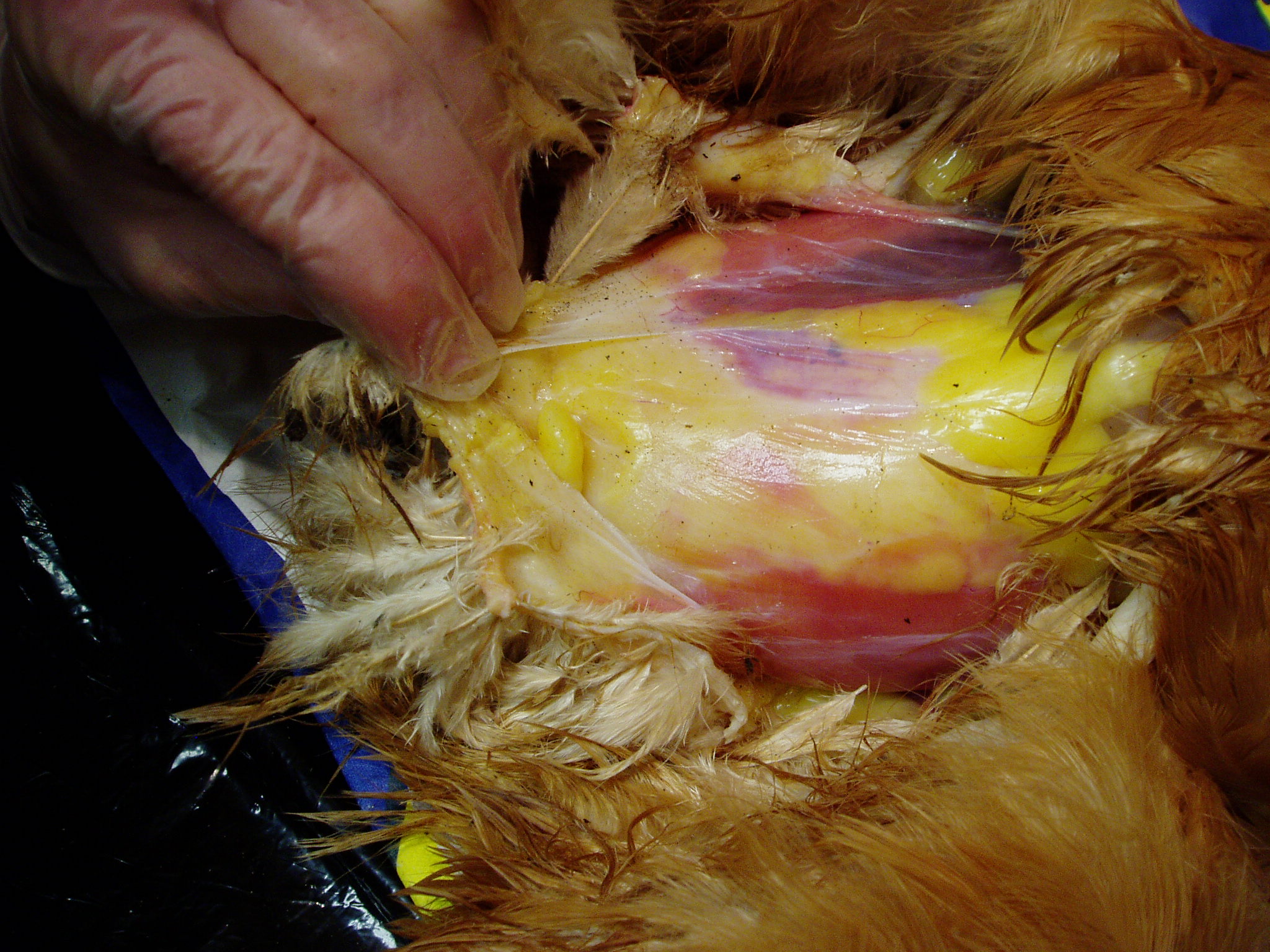
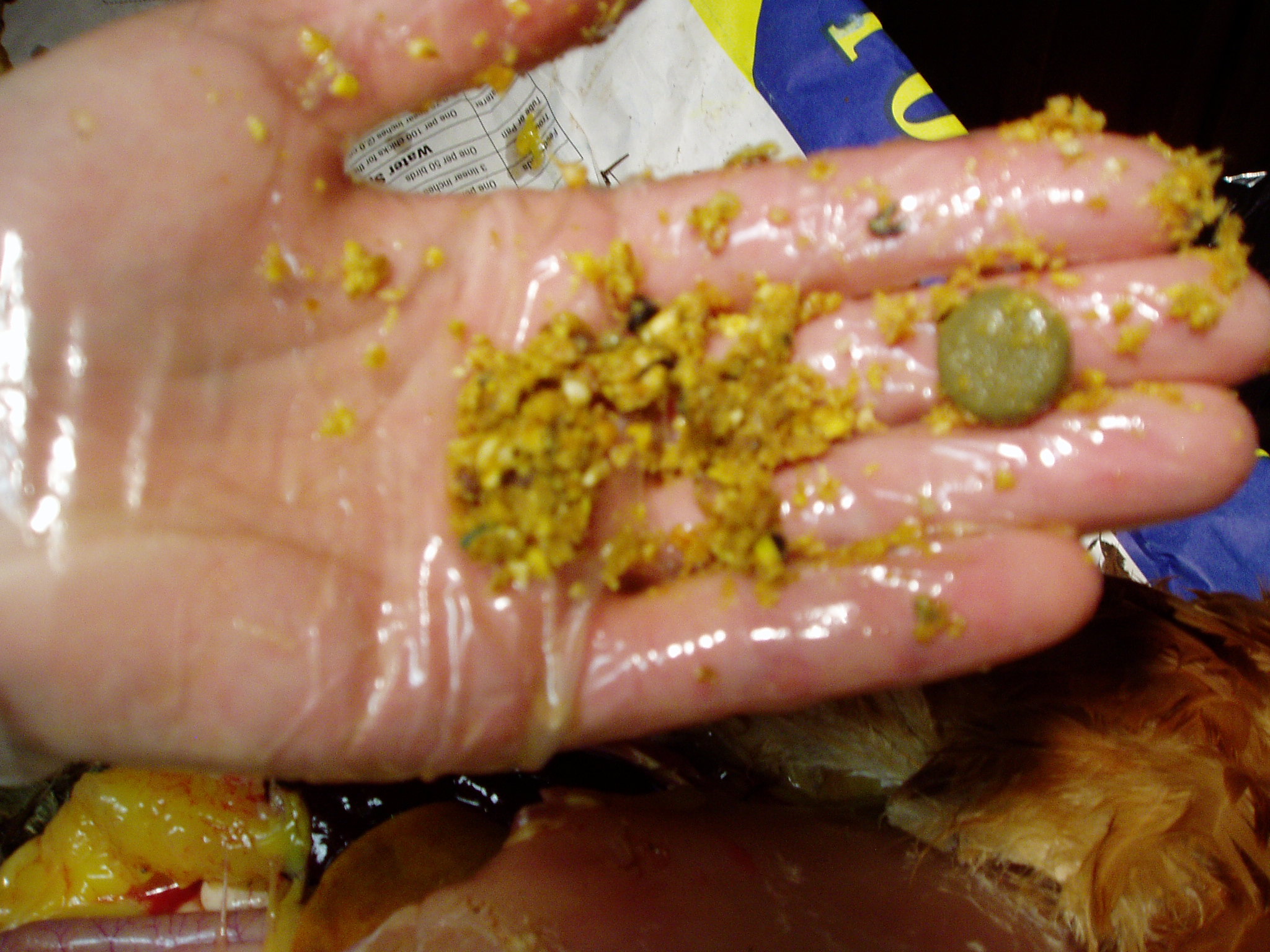
The hen had laid (and eaten part of) a soft-shelled egg. When I opened her up, I found a HUGE amount of fat and a massive amount of blood in the body cavity, seemingly a liver hemorrhage. In addition to the liver issues, she had a nice collection of ascaris (roundworms) in the intestinal tract (one was over 2 inches long). Her gizzard contained very little grit and a large amount of grains/vegetable matter and some plastic pieces.

Dr. Sakas of Niles Animal Hospital reviewed the necropsy pix and said that the underlying comdition was the fatty liver, and death was caused by an aneurysm. She died shortly after laying an egg, and the strain of egg laying can cause a hemorrhage.

Fatty liver disease (hepatic lipdosis) is also seen in caged birds (like parrots and parakeets) that are fed a diet of strictly seeds. A diet that is too nutrient dense, as well as lack of exercise, can cause fatty liver syndrome. Fat builds up in the liver and the body cavity and can cause shortness of breath, organ failure, egg binding, and hemorrhage. I’ve taken my parakeets off of a seed diet and put them on a pelleted formula for this reason. [NOTE: Diet conversion of caged exotics must be done slowly and under very careful observation. Birds to do not take to change well and can starve themselves to death during a diet conversion. Check with your avian veterinarian before trying this on your own.]

My friend doesn’t overload her birds with bread, mealworms, or other treats, but as I observed the birds eating from the feeder, they were picking out the bits of corn and leaving the mash. I advised her to feed a finely ground mash without the bits of corn, a crumble, or a pelleted food to prevent the hens from picking the “marshmallows” out of the “Lucky Charms” and leaving the “cereal” behind.

I also suggested minimizing the amount of food available to the birds, limiting it to about 1/4 lb per bird per day. More exercise would probably be beneficial, too.

The pictures below are not for the faint of heart!

The gizzard

The gizzard

Yellow fat with coagulated blood from liver hemorrhage

Yellow fat with coagulated blood from liver hemorrhage

Roundworm (Ascaris)

Roundworm (Ascaris)

Fatty liver with large blood clot to the left

Fatty liver with large blood clot to the left

Yellow fat in the body cavity

Yellow fat in the body cavity

Gizzard contents

Gizzard contents

Thoughts on Roosters


A few thoughts on roosters from my ag colleague, Deborah Niemann, of Antiquity Oaks Farm Blog. Deborah is also a published author. You can read more about her and her books on her website. 

We were vegetarians for 14 years when we got chickens, and we never had any intention to start eating chicken or any other meat for that matter. I bought three roosters with my 24 hens so that they could set and hatch chicks and continue the cycle of life, and I didn’t mind the idea of having more than the recommended number of roosters because they are so pretty, and I thought (naively) that beauty should be valued as much as eggs.

After two years, we had 40 hens and 24 roosters. Well, as beautiful as the roosters were, the hens looked horrible. Almost all of them had bald backs, no feathers, and raw skin from being mated constantly. Roosters have a non-stop drive to reproduce, so they are chasing hens and jumping on their backs all day long. When you have one rooster for every ten hens, it’s not a big deal. When you have more than one rooster for every two hens, the poor girls are literally “run ragged.”

One day I walked into the barn and discovered that one of the roosters was completely blind and had one eye that had been completely pecked out. I knew the roosters had been fighting, and I’d break it up when I saw it, but I couldn’t be around 24 roosters 24/7. My husband and I argued about putting him down or having him live out his life in a cage, and by the time I’d convinced my husband to chop off his head, he had died. A week later, we went through the same thing again, and by the third time this happened in two weeks, we realized that the roosters were very unhappy with all the competition and were seeking some type of equilibrium. We could either let them continue killing each other, or we could reduce the playing field ourselves. After much debate, we decided that a quick ax to the neck would be far more humane than letting them kill each other slowly. When they fight, they peck at each others’ heads until one is blind and/or brain damaged. This does not lead to a quick death.

We have 32 acres, and although we have fencing to keep out coyotes, the chickens can go through or fly over it if they want, and some of them do. We once had a couple of “brother” roosters who would range out about ten acres, and one day we found one of them staring into space in the corner of the chicken house. We had seen them fighting the day before. So, although hens don’t fight if they have plenty of space, having enough space is not the issue for roosters who are testosterone-driven.

Allowing roosters to live out their natural life is a really nice idea, and one which I thought I could achieve — before I actually tried. I suppose you could keep them caged by themselves, but I don’t see that as a terribly fulfilling life. If you want eggs, roosters will die somewhere, sometime. Either you buy sexed pullets, and the left-over cockerels die at the hatchery, or you buy straight-run, and the roosters live a few months before becoming dinner or perhaps a little longer before they kill each other. No, not every rooster will die in those fights, but I can tell you that even the winners look like they’ve suffered a lot of pain.

Penny

All in a day’s work….


Well, today was a double-header.

This afternoon, I consulted to a family off the Mag Mile who very kindly rescued baby chicks from a less-than-ideal situation after they were hatched at a school. There are two little ones who are doing their best to hang on.

Then I moved on to a family who lost a hen for unknown reasons. Necropsy revealed a very impacted crop due to grass clippings and a thin-shelled egg, broken in the oviduct.

Spring 2013 classes


Hi, chicken fellow chicken enthusiasts!
It’s been a busy spring, and I’m working on getting caught up on my blog posts.

A few important dates to note:

Saturday, March 23: Chicken-keeping and coop-building classes at the Chicago Botanic Garden.

Saturday, April 13: 

Saturday, May 4: Plainfield Expo, Plainfield, IL

Saturday, June 1: Chicken health workshop, information to come

2 March, 2013: Home to Roost Teaches Chicken-Keeping Class


Basic Backyard Chicken Care

March 2, 2013, 10:00 AM to 1 PM 

Location: Rebuilding Exchange 1740 W Webster Avenue Chicago, Illinois 60614 United States

chicken

Farm fresh eggs from your own back yard?

YES!

Please join us for this Cadillac of chicken-keeping classes! This 3-hour workshop covers best practices forBasic Backyard Chicken Care in Chicago and surrounding communities. Raising chickens as pets and for eggs is LEGAL in Chicago – and part of our growing local food and urban agriculture scene. Learn how to keep you, your chickens, & your neighbors happy – from daily needs and year-round care to relevant city regulations. You will leave the workshop with the knowledge, recommendations, and resources you need for your own home flock – and you’ll make connections with other chicken enthusiasts in Chicago.

For more info and to register, visit the Angelic Organics Learning Center site.

5 Jan 2013: Chicken-Keeping Class at the Garfield Park Conservatory


OLYMPUS DIGITAL CAMERA

Raising Chickens in the City: Opportunities and Challenges

Saturday, January 5, 2013

Hours: 10:00 am – Noon

Where: Jensen Room

Cost: $15 / $10 GPCA Members and Volunteers

Is one of your New Year’s resolutions this year to get in touch with your “inner farmer?” Let us help! Jennifer Murtoff, president of Home to Roost Urban Chicken Consulting, joins us to share the reasons raising chickens in the city is both important and doable. Come join us for this informative class, where you’ll learn a bit about how to choose a chicken for your space, get coop plans, and more.

Please register by visiting the web page and clicking the “register now” button below. If you have further questions about this class, please contact Melanie Harding at x16 ormharding@garfieldpark.org. Please note that registrations cannot be refunded after Friday, December 27th. If you purchase a spot in this workshop after 5pm on Friday, January 4th, please either bring a printed copy of your email receipt, or show it on your smart phone at the door of the workshop.


10 Nov., 2012: Home to Roost Teaching Basic Backyard Chicken Care Workshop


Basic Backyard Chicken Care

November 10, 2012 10:00 AM to 1 PM 

Location: Chicago’s Logan Square area (TBD). See Angelic Organics Learning Center site for details as they become available.

NEW: This year we will have access to a functioning chicken coop!

Farm fresh eggs from your own back yard?

YES!

Please join us for this Cadillac of chicken-keeping classes! This 3-hour workshop covers best practices forBasic Backyard Chicken Care in Chicago and surrounding communities. Raising chickens as pets and for eggs is LEGAL in Chicago – and part of our growing local food and urban agriculture scene. Learn how to keep you, your chickens, & your neighbors happy – from daily needs and year-round care to relevant city regulations. You will leave the workshop with the knowledge, recommendations, and resources you need for your own home flock – and you’ll make connections with other chicken enthusiasts in Chicago.

For more info and to register, visit the Angelic Organics Learning Center site.